Lanza and the Press: Concerts and Opera 1942-1950
Armando Cesari, Vince di Placido, Lee Ann Cafferata, and Stefanie Walzinger contributed articles to the press sections. Notes by Derek McGovern and Lee Ann Ghajar.
Introduction
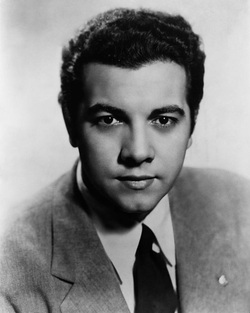
In 1940 Mario Lanza began studying song and operatic repertoire with former soprano Irene Williams, eventually learning two operatic roles and twenty songs. That same year, the 19-year-old tenor made what was reportedly his first public appearance when he performed at Philadelphia's Fleischer Auditorium.
In 1940 Mario Lanza began studying song and operatic repertoire with former soprano Irene Williams, eventually learning two operatic roles and twenty songs. That same year, the 19-year-old tenor made what was reportedly his first public appearance when he performed at Philadelphia's Fleischer Auditorium.

The conductor on that occasion was local bandleader Earl Denny, who subsequently directed the string ensemble that accompanied Lanza's performance of the Bach-Gounod "Ave Maria" at Saint Mary Magdalen de Pazzi Church in Philadelphia on Christmas Day, 1940. Twenty-one years later, Denny recalled the latter performance as "an event I shall never forget. People literally went down on their knees afterwards" (Italian-American Herald, 17 August 1961).
Around the same time, Lanza joined the former Rome Opera tenor Rodolfo Pili's Apollo Grand Opera Company and YMCA Opera Company, subsequently performing in various operas under Pili's direction at venues around Philadelphia, including the Town Hall and churches. One of these was Crispino e la Comare, an 1850 work by Federico and Luigi Ricci (with a libretto by Verdi's regular collaborator, Francesco Piave), in which Lanza performed the lead tenor role of the Contino del Fiore opposite local soprano Antoinette Pescrilli, reportedly to "huge success" (source: Marion Benasutti, "The Lanza Story, Chapter 14: When the Twain Did Meet," Italian-American Herald, 13 July 1961).
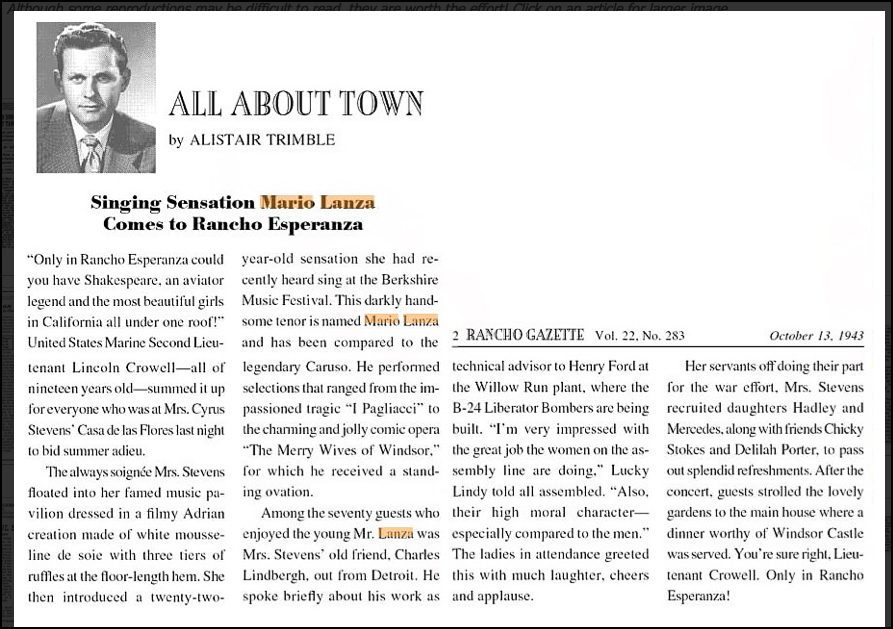
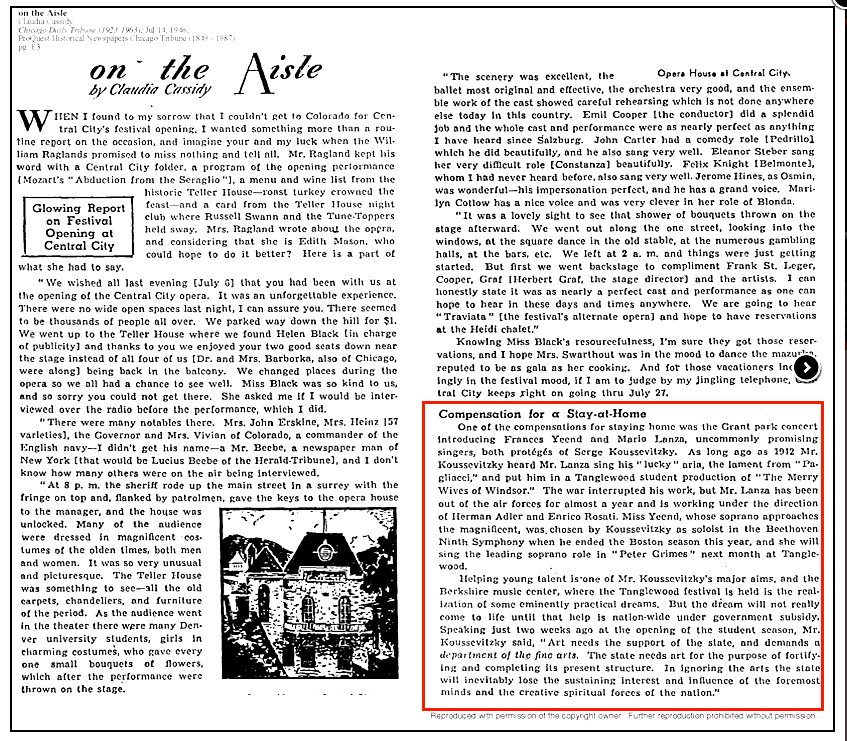
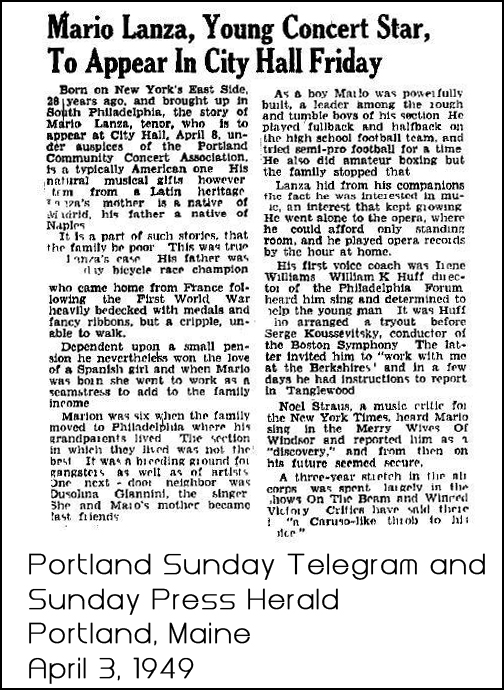
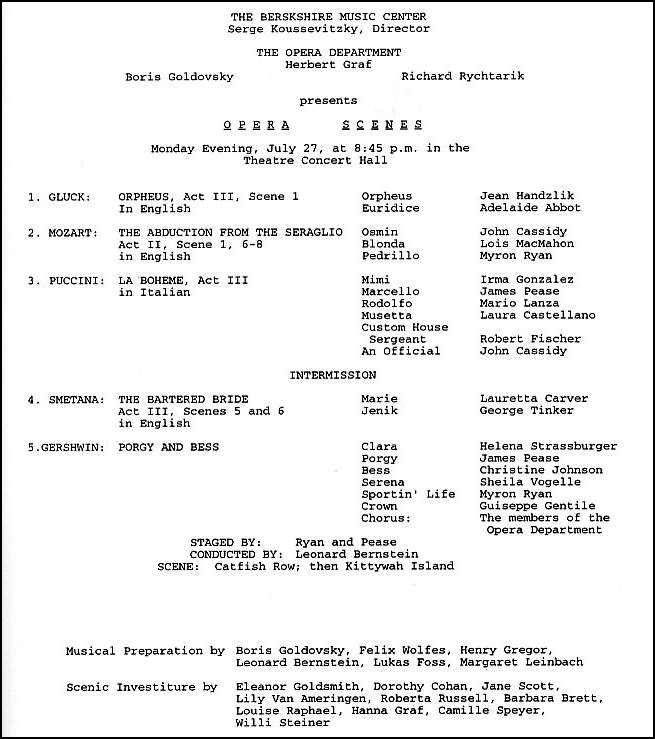
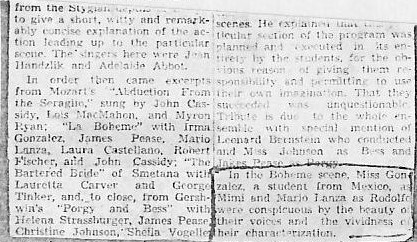
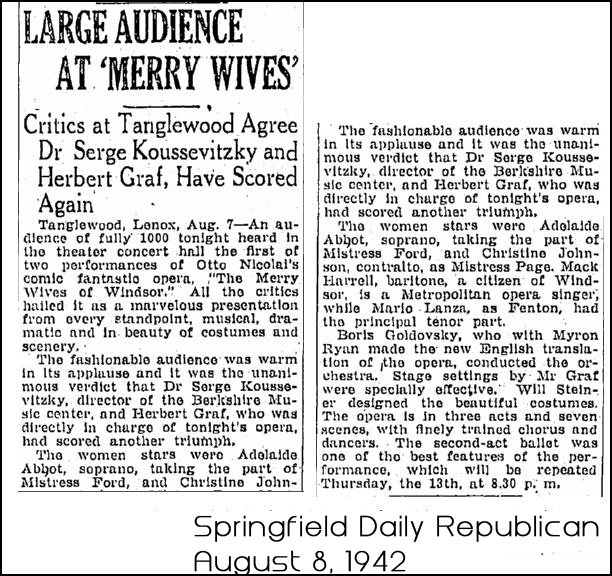
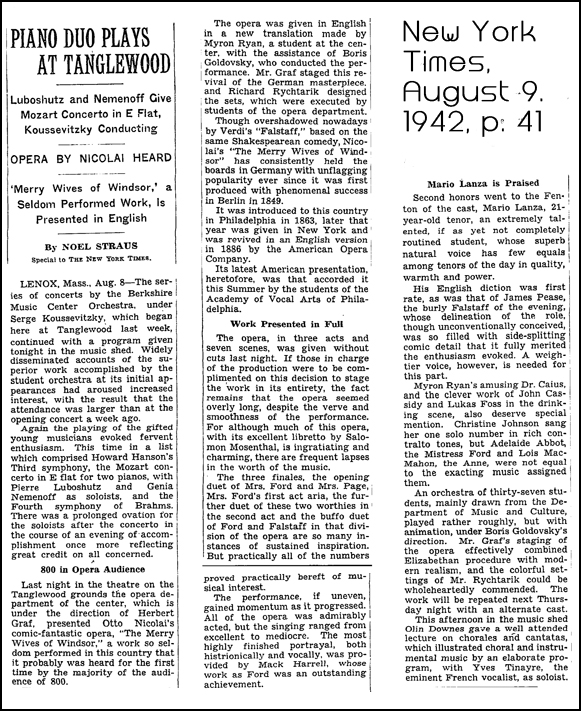
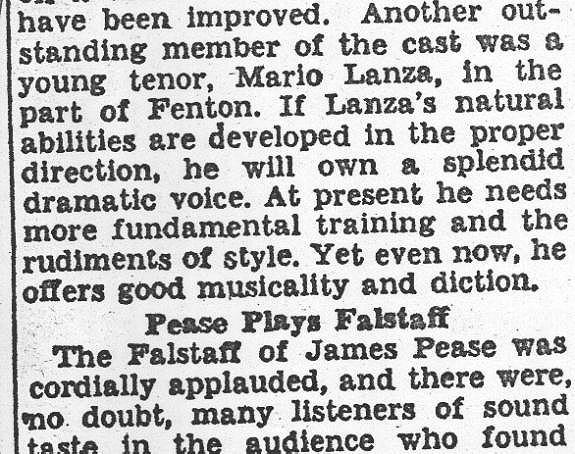
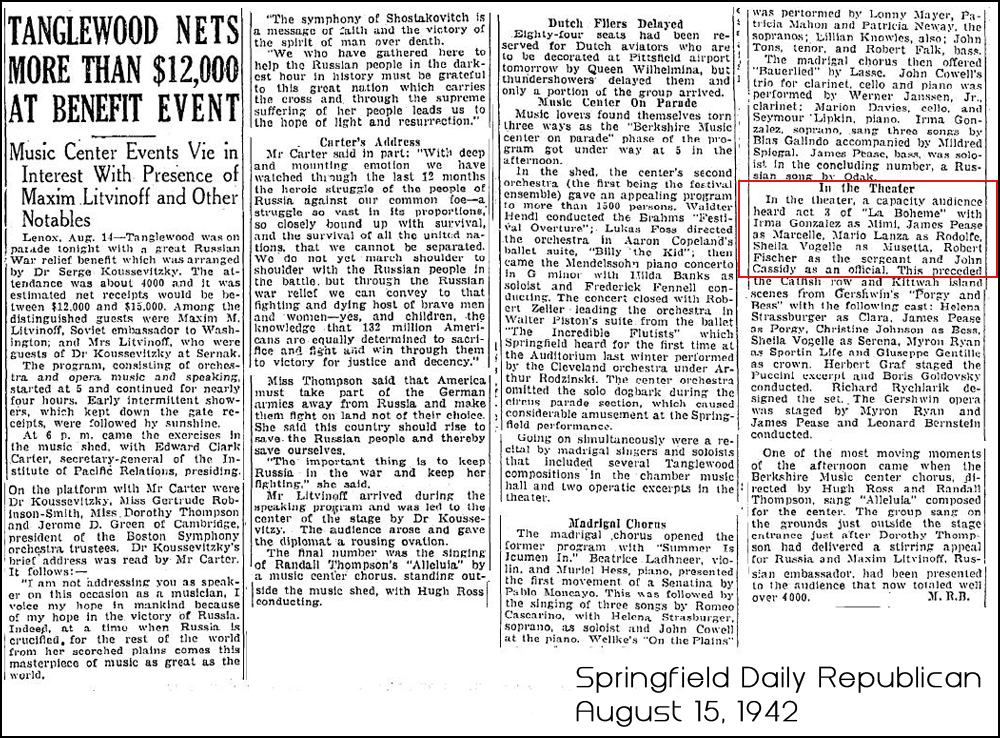
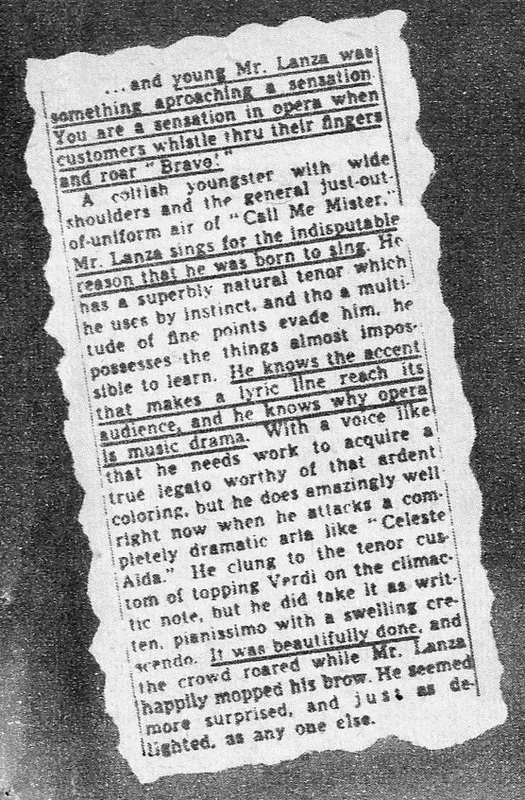
Between April and June 1942, Lanza gave at least three concerts, appearing in both Philadelphia and in Atlantic City, where he sang alongside seasoned performers such as soprano Josepha Chekova and contralto Anne Simon. However, it was an audition for Serge Koussevitzky, renowned conductor of the Boston Symphony Orchestra, in March of that year—and the venerable maestro's granting of a scholarship to study at the prestigious Berkshire Music Festival in Tanglewood—which exposed the young tenor to some of the top music critics in the USA. In August 1942, Lanza appeared in the role of Fenton in two staged performances of Nicolai's 1849 comic opera The Merry Wives of Windsor at the Berkshire Festival, where he earned critical raves.
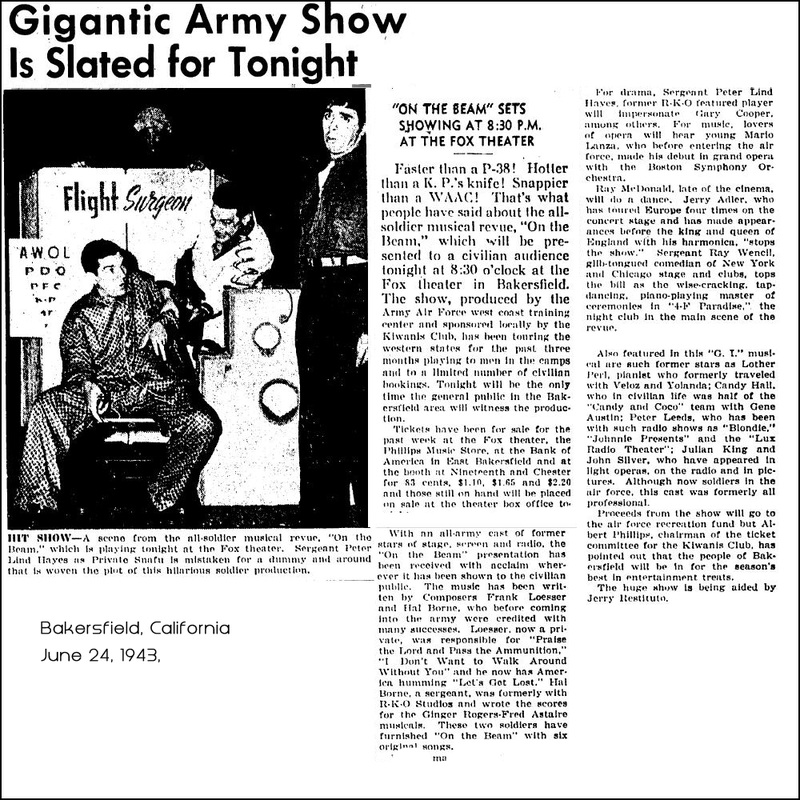
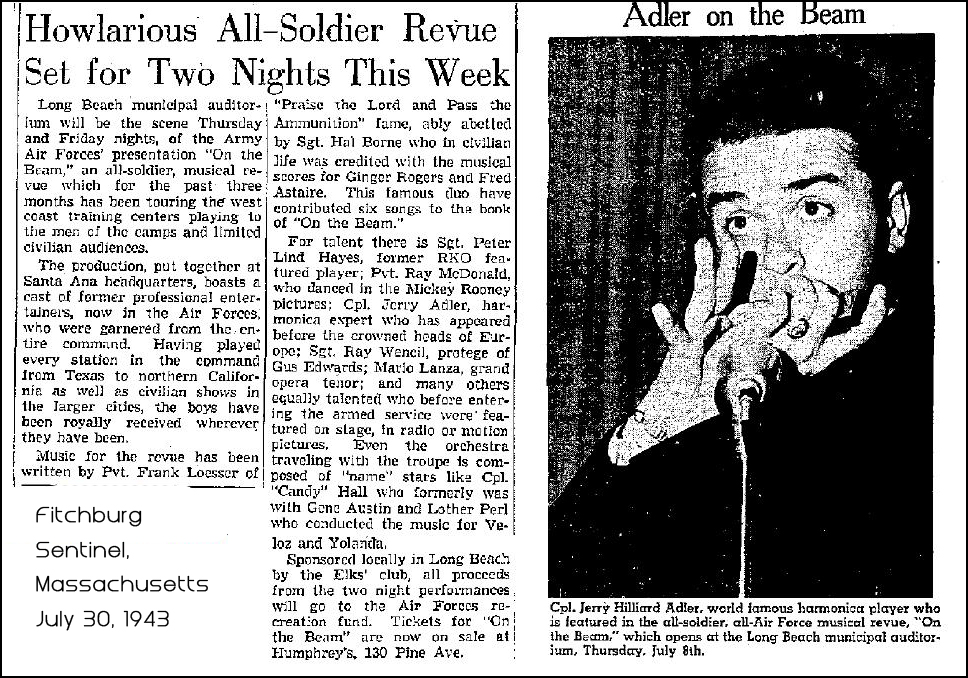
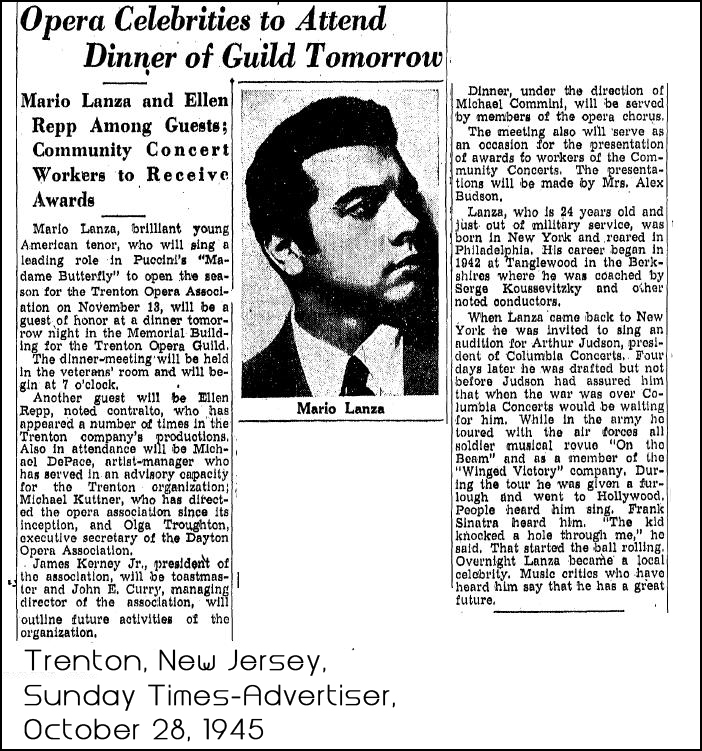
An operatic career seemed a certainty, but Lanza had not reckoned on conscription into the US Army. From 1943 to 1945 he performed in the Army's Special Services, appearing initially as a featured performer in the variety show On the Beam and then as a chorus member in the musical play Winged Victory.
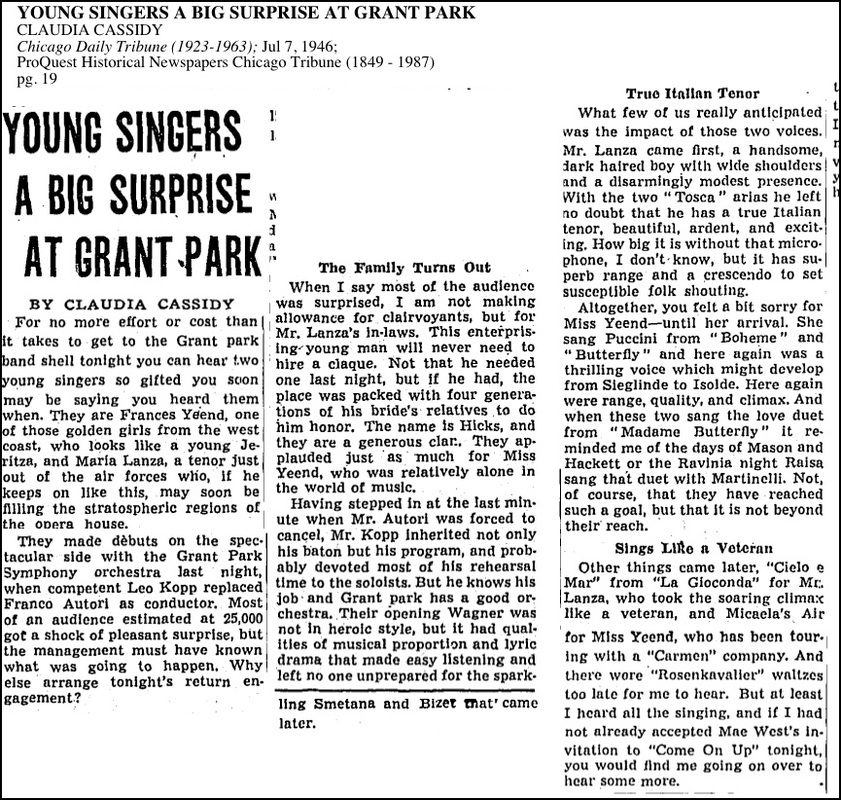
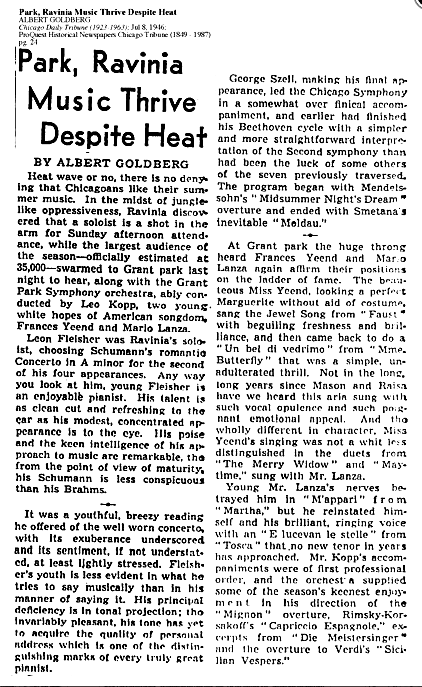
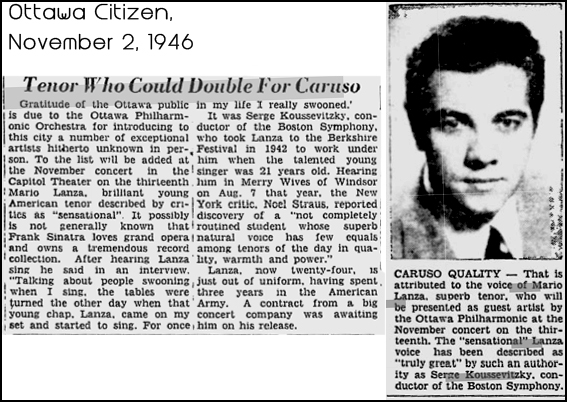
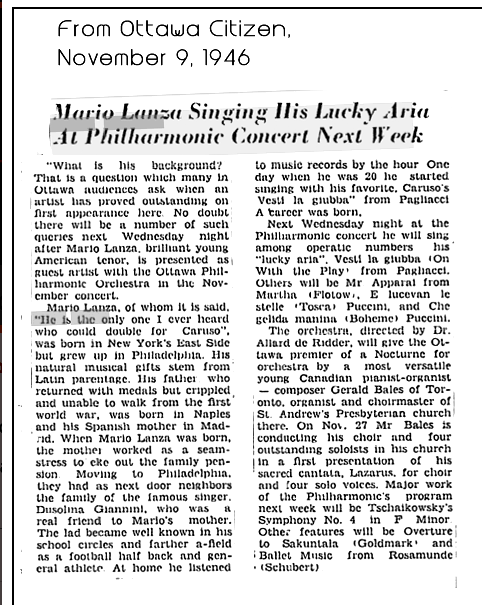
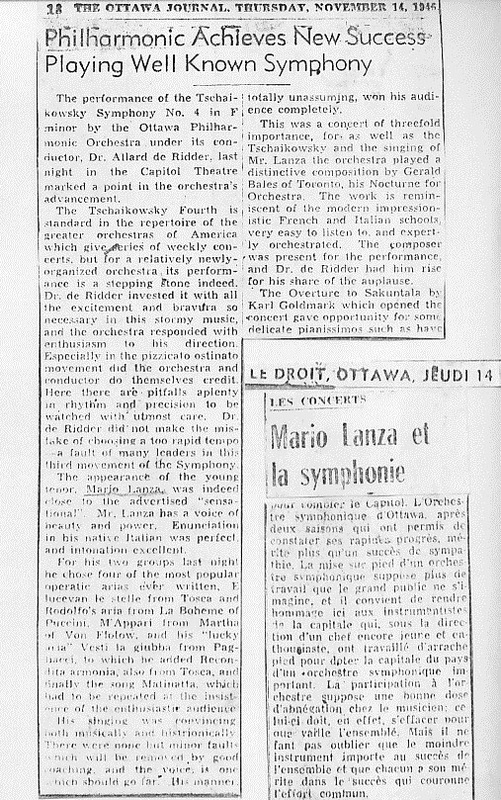
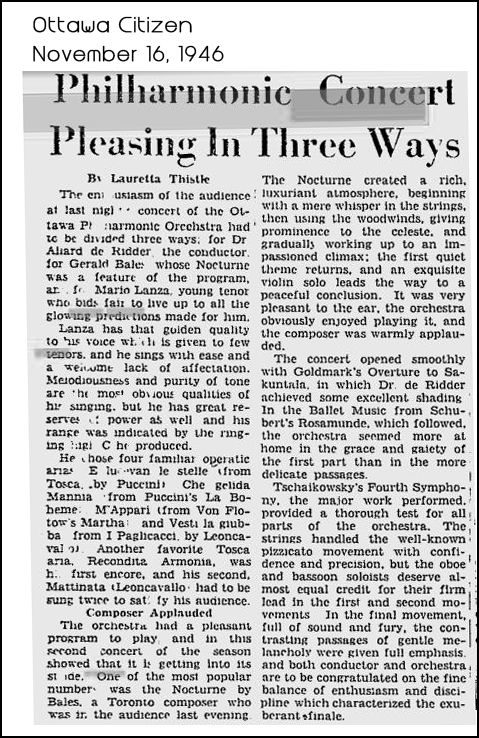
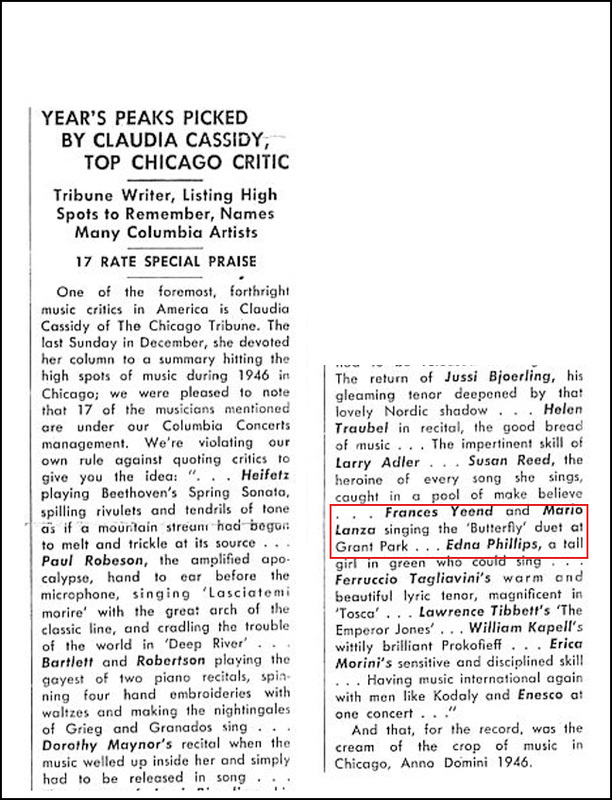
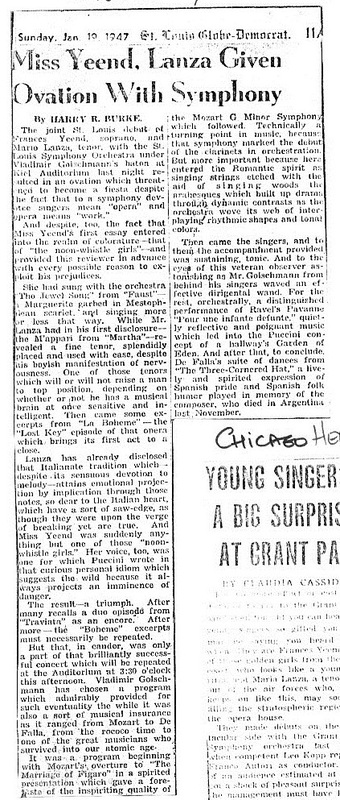
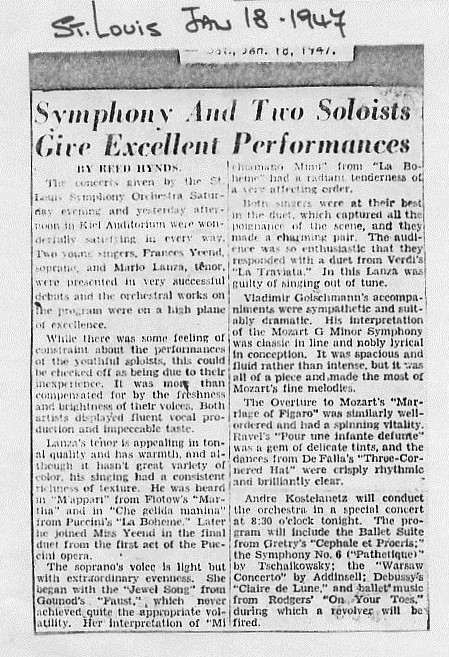
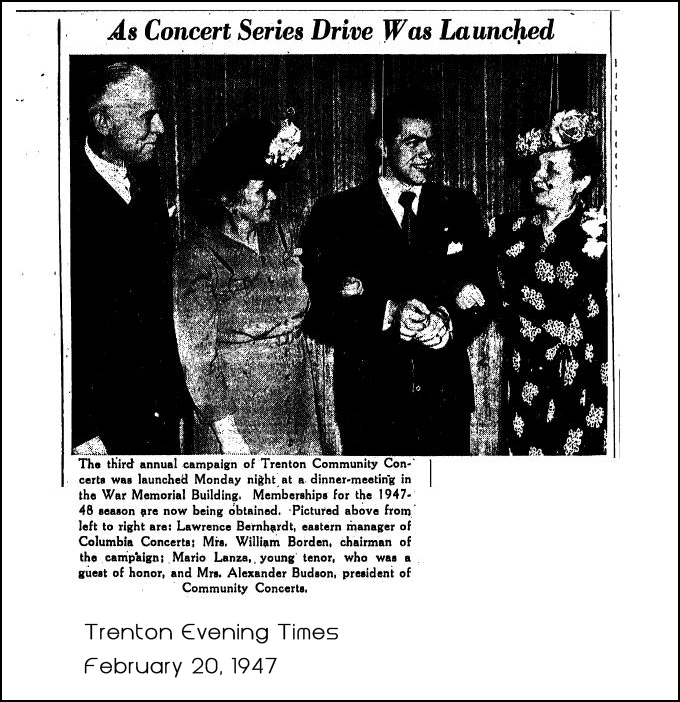
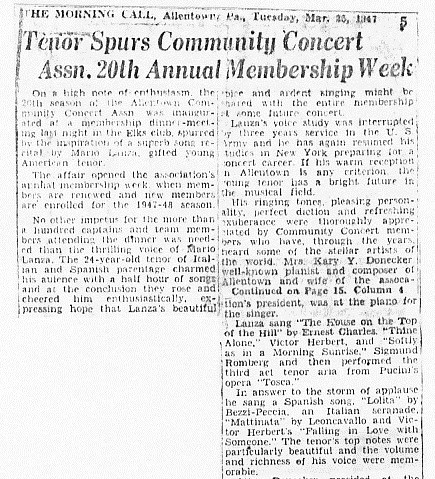
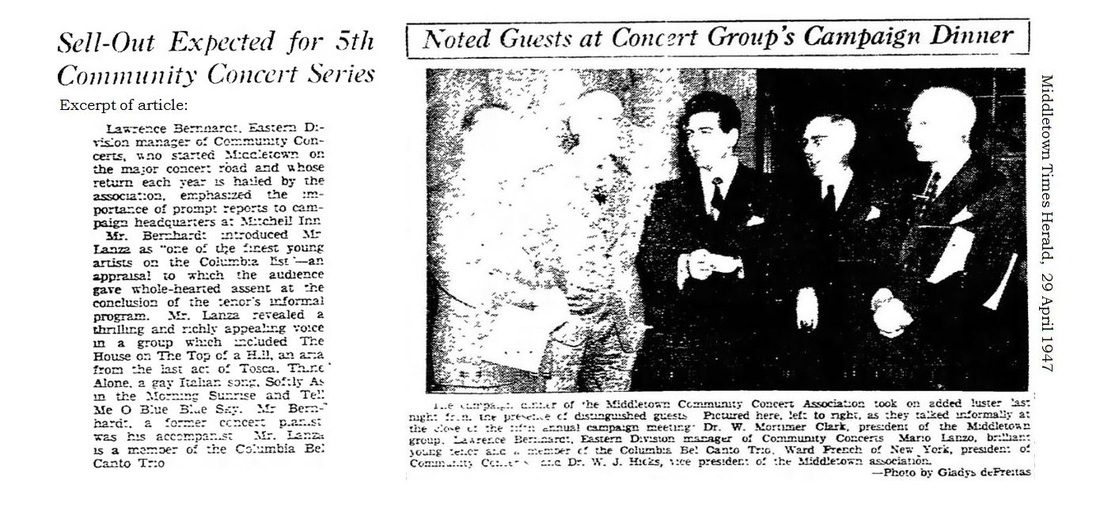
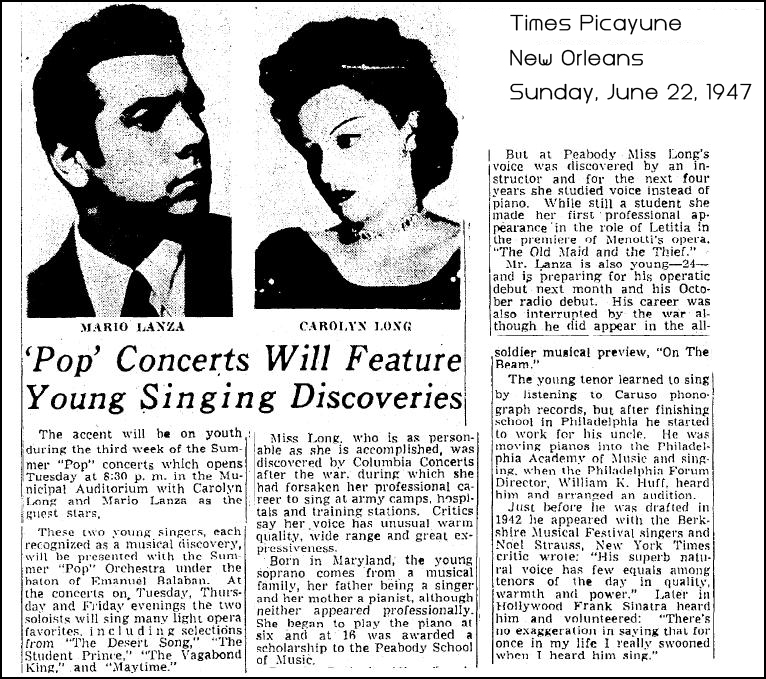
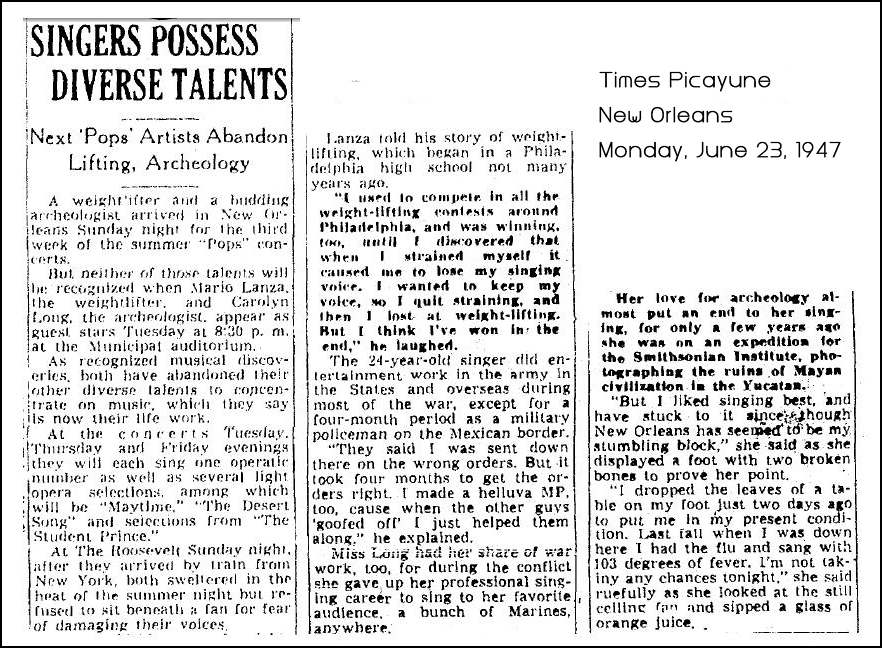
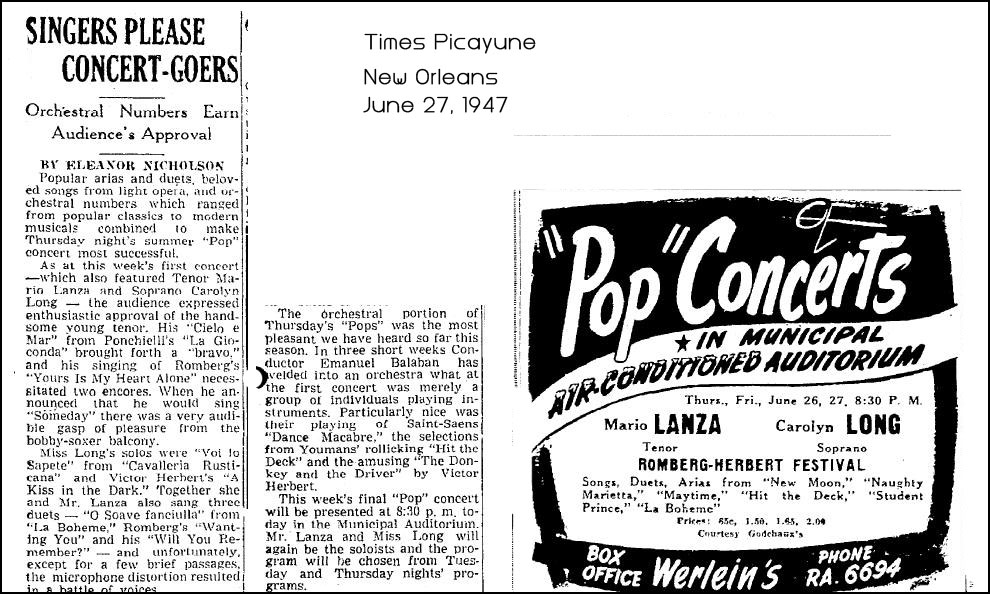
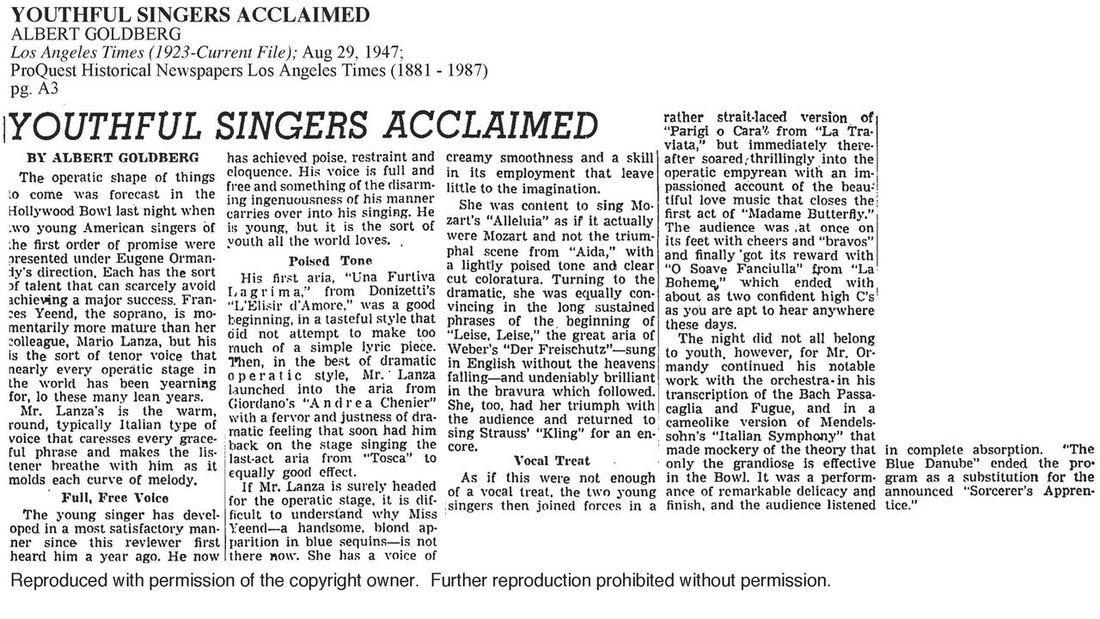
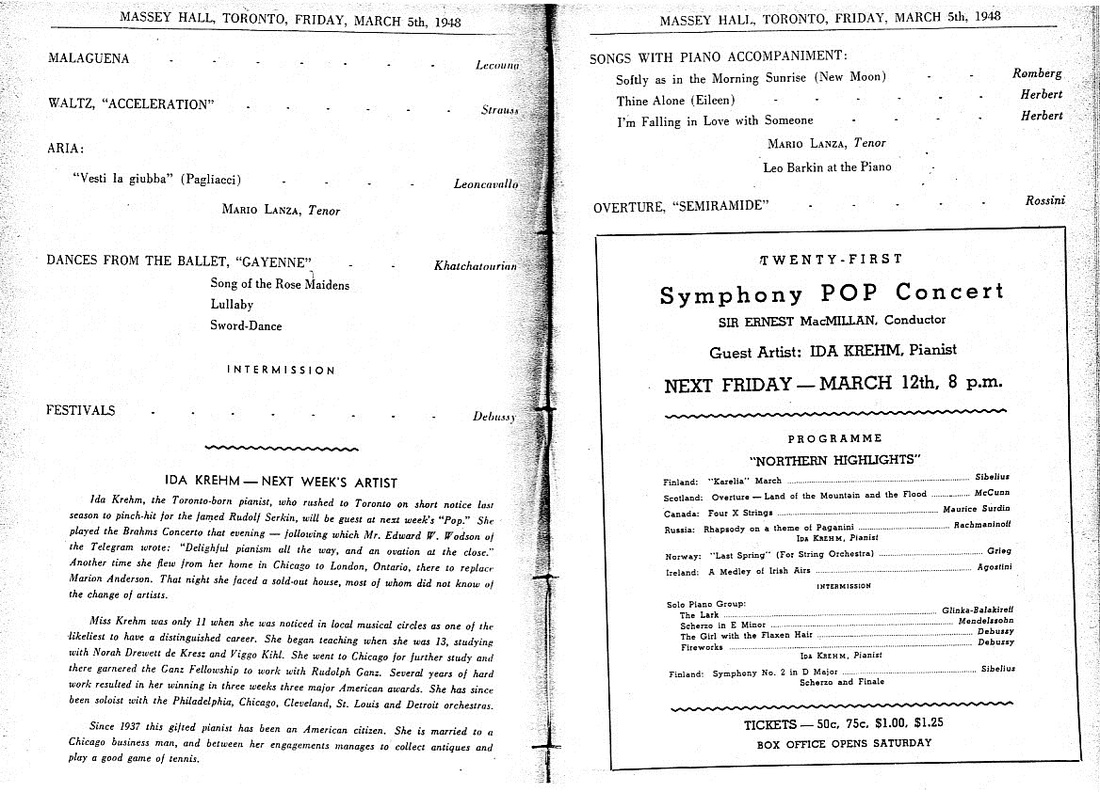
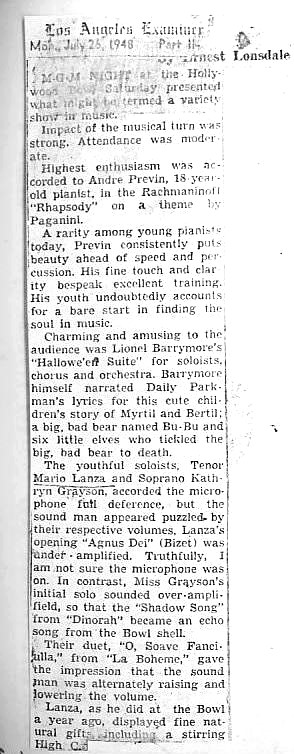
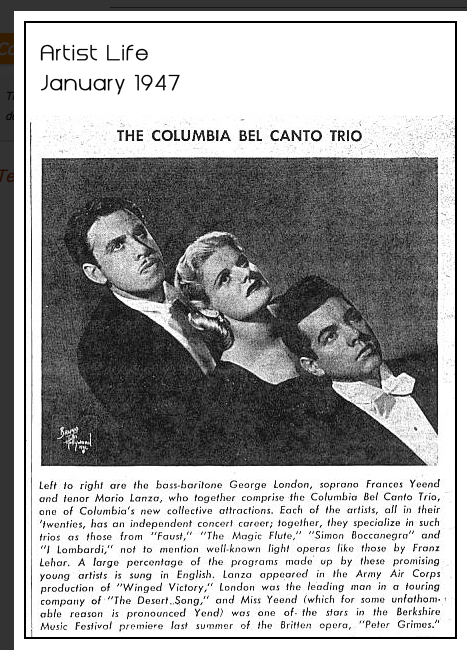
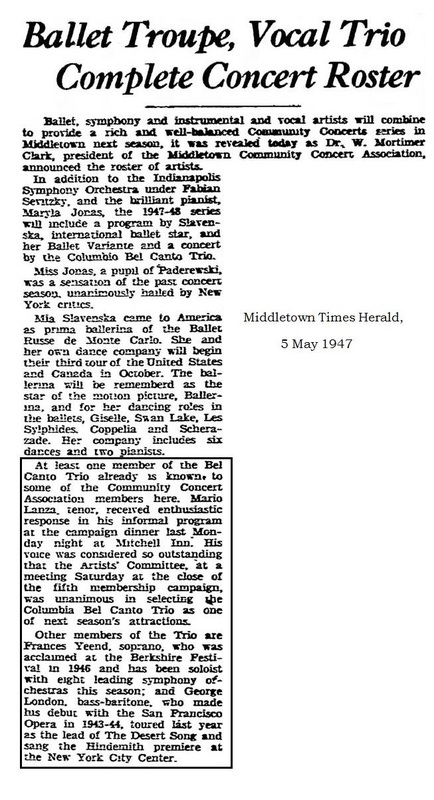
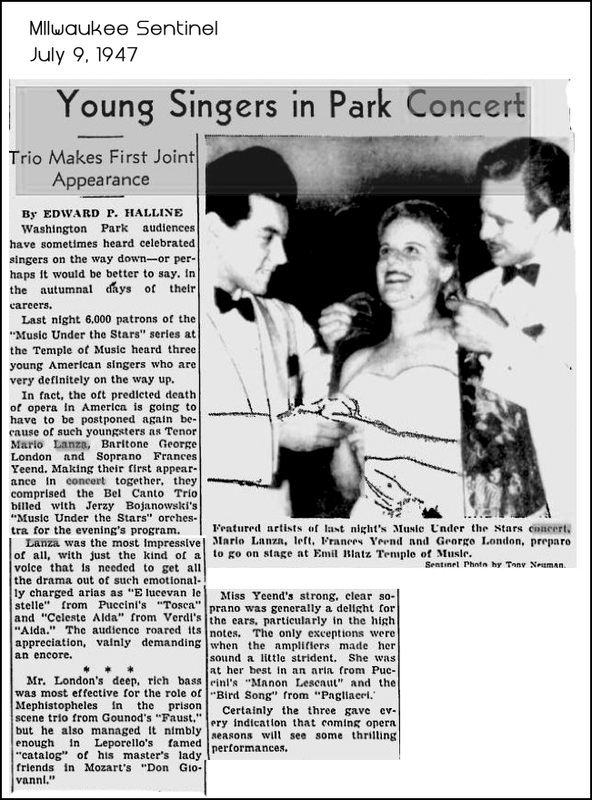
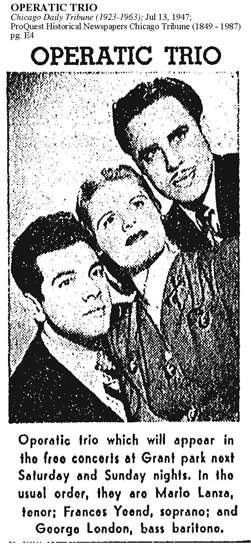
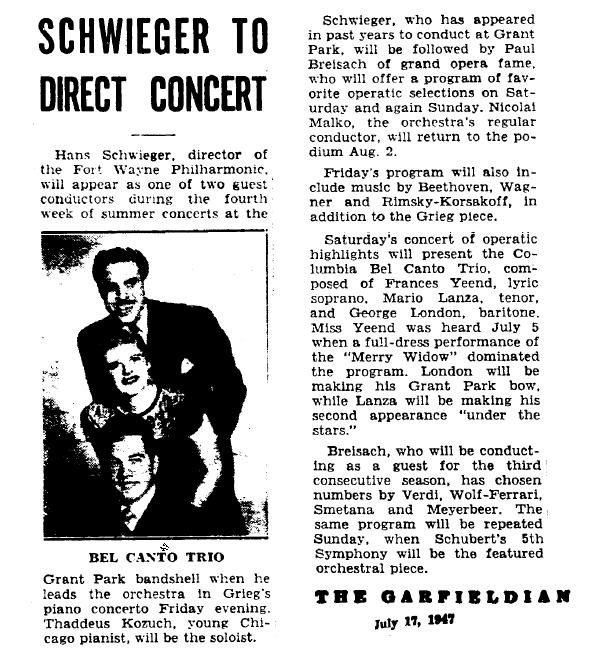
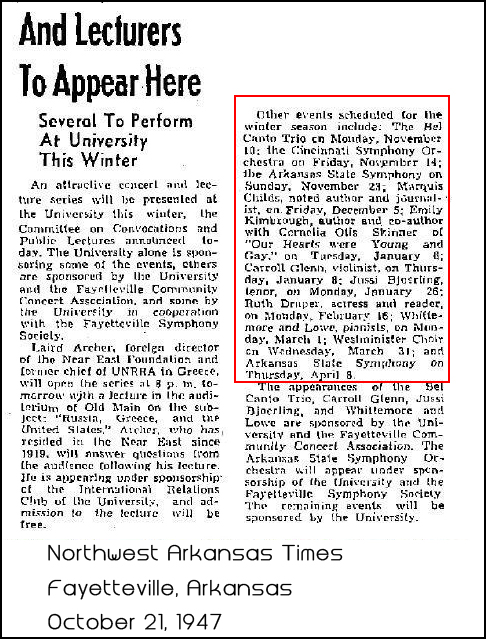
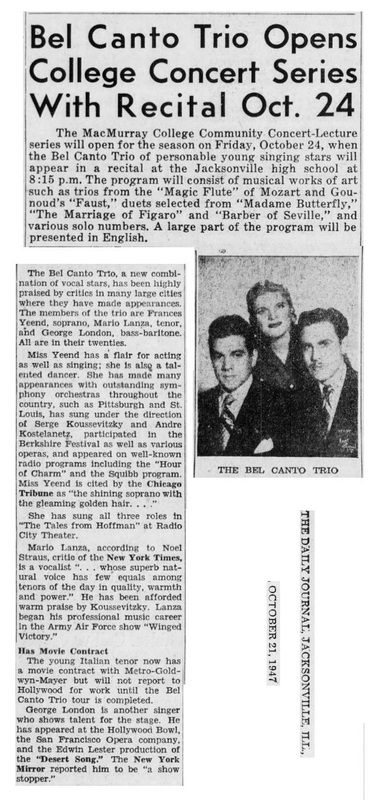
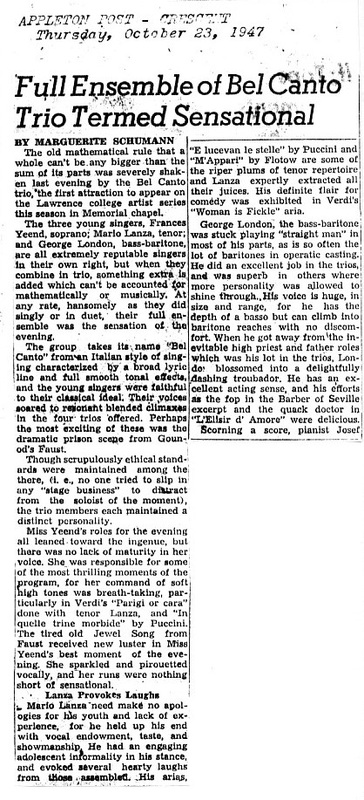
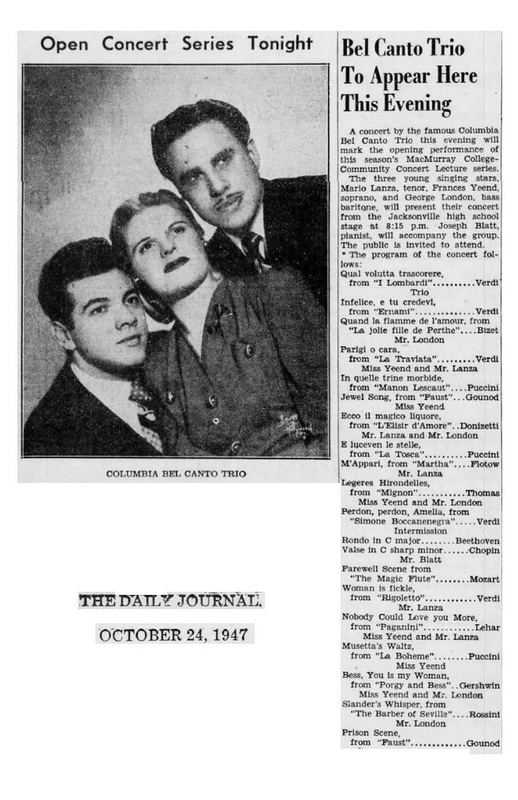
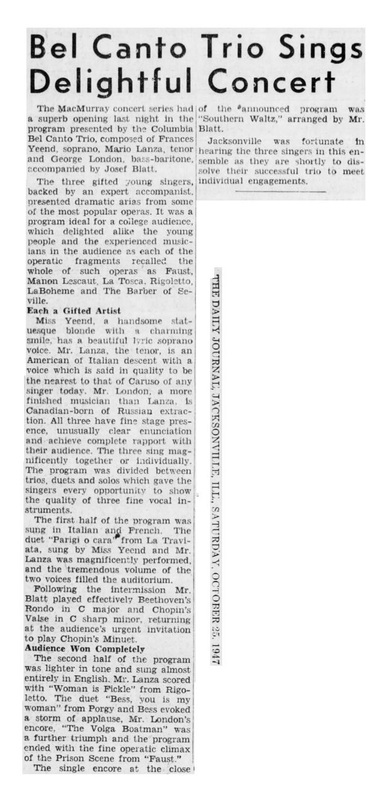
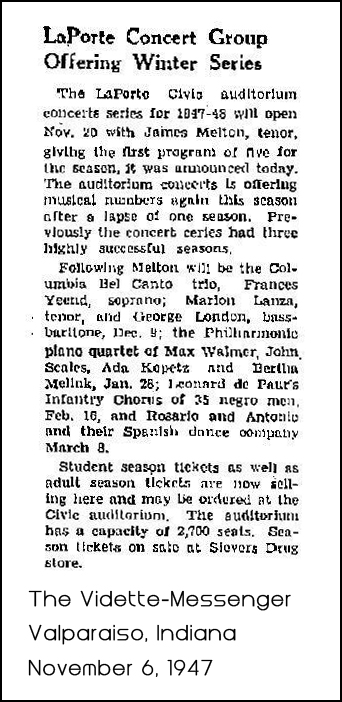
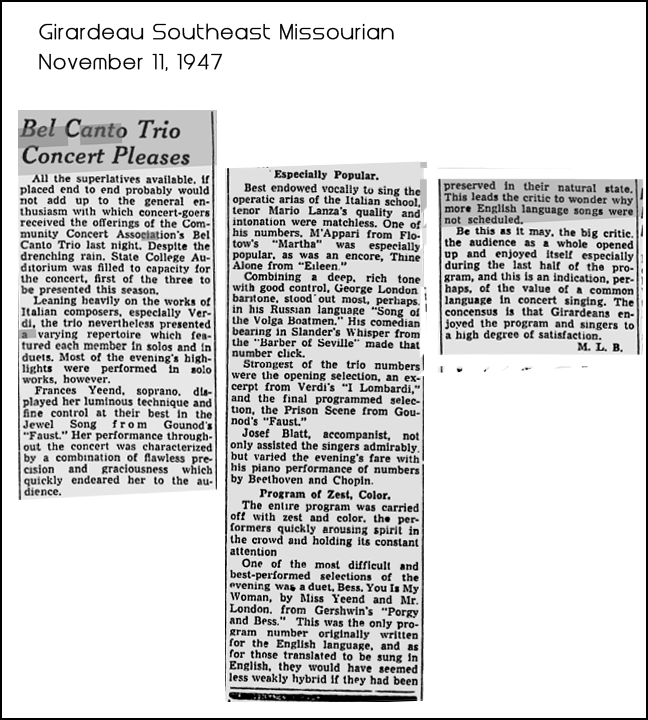
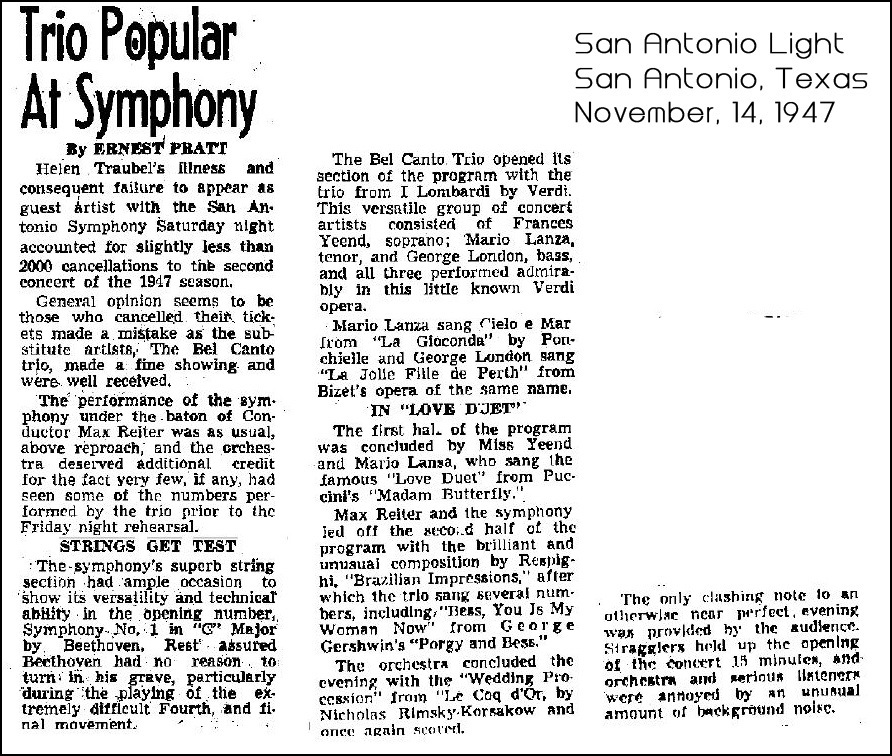
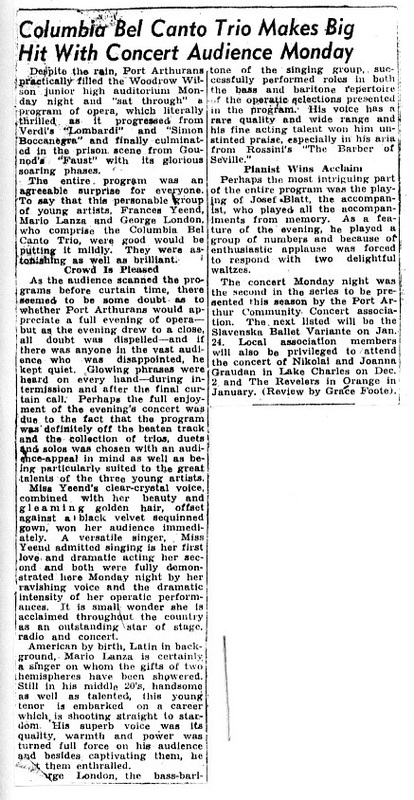
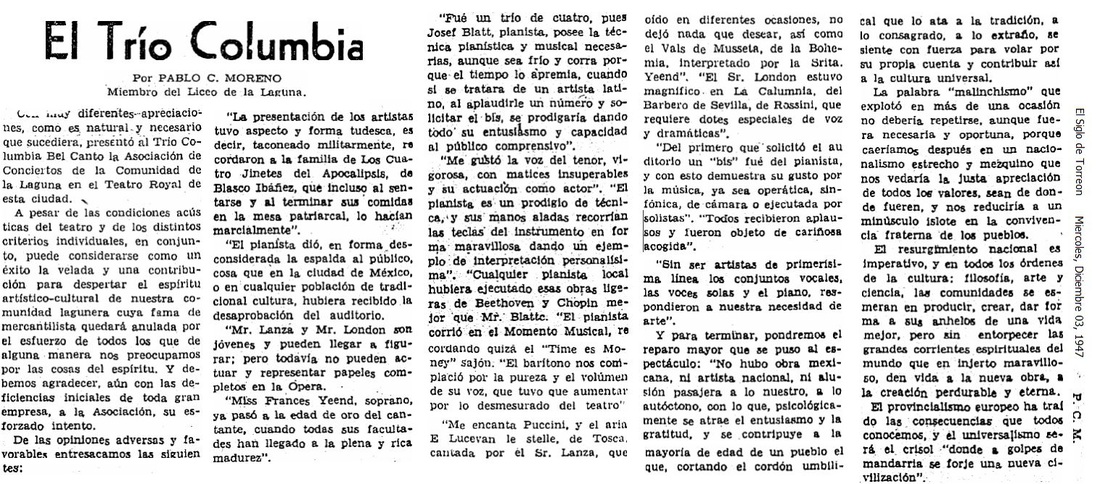
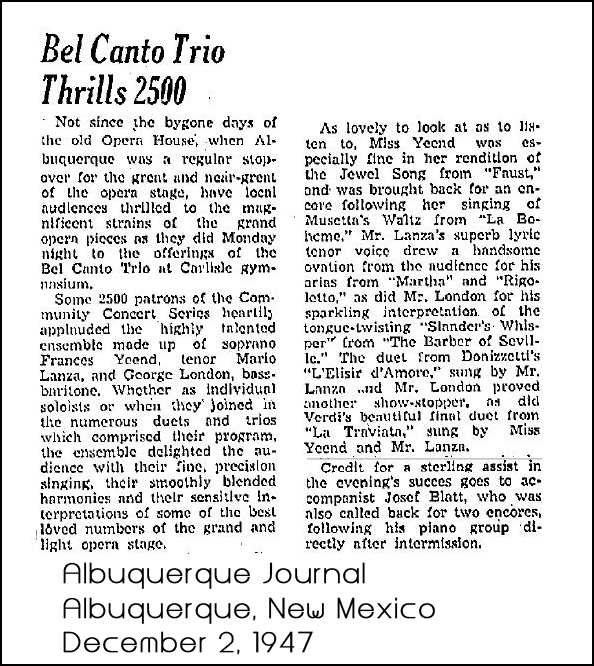
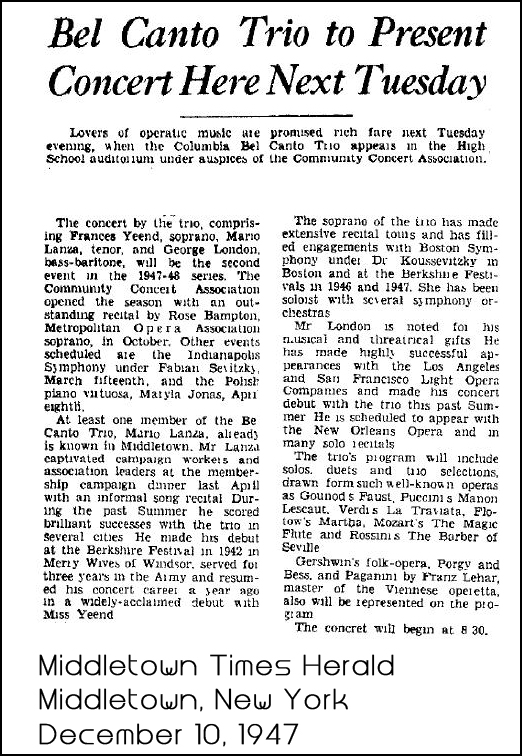
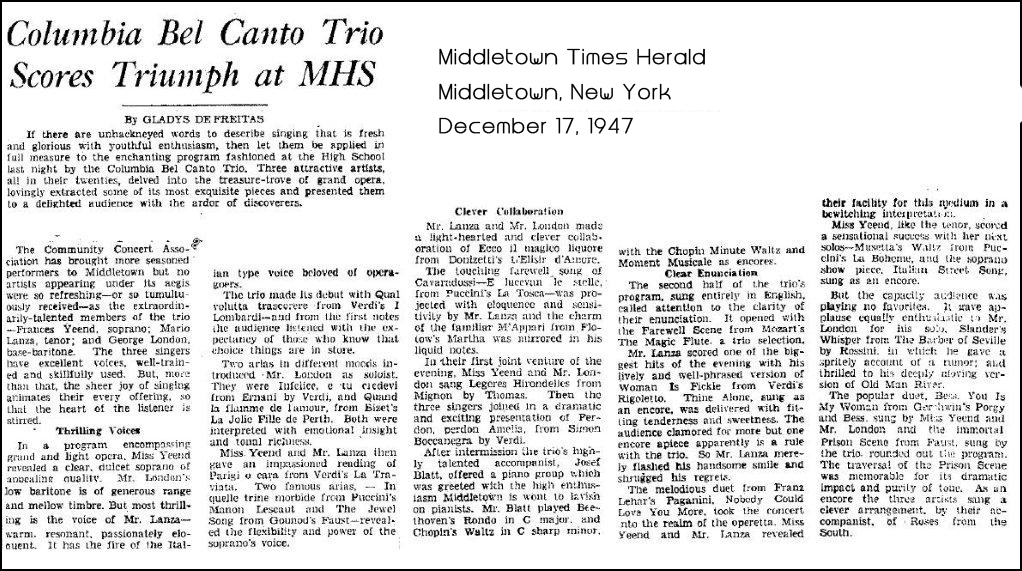
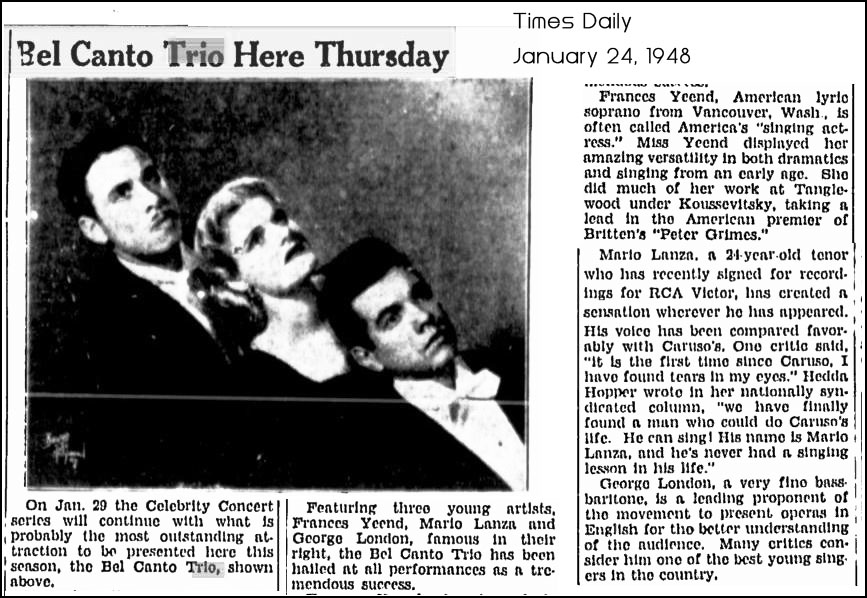
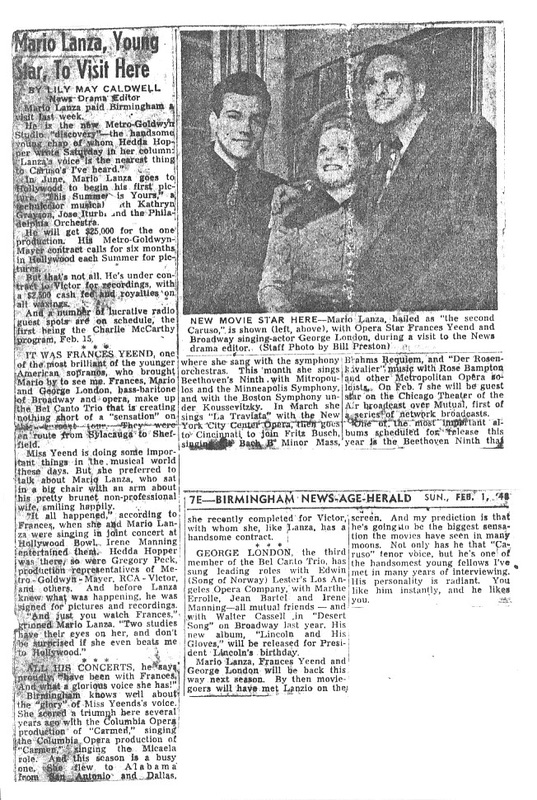
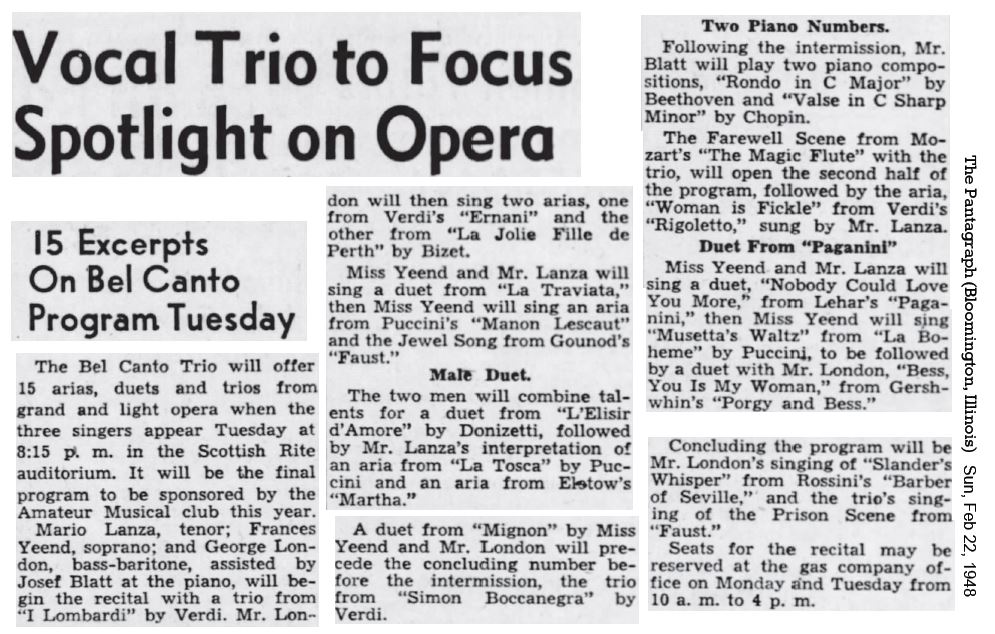
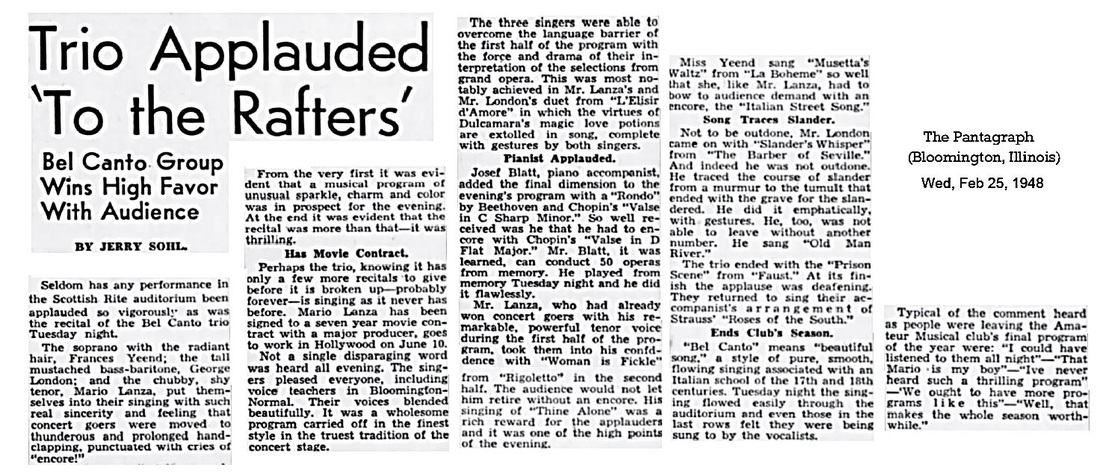
Resuming his concert career in 1945 with appearances with the NBC Symphony Orchestra under conductor Peter Herman Adler and the Boston Symphony Orchestra under Arthur Fiedler, Lanza was at the same time acutely aware of the need to develop a secure vocal technique. The legendary voice teacher Enrico Rosati proved the answer to his prayers, and fifteen months of intensive study followed. Although Lanza still performed occasional concerts during this period throughout the US and also in Canada—both as a solo performer and with sopranos Frances Yeend and Carolyn Long—it was not until July 1947, when he teamed up with Yeend and bass-baritone George London to form the Bel Canto Trio, that the now vocally secure tenor began performing on a regular basis.
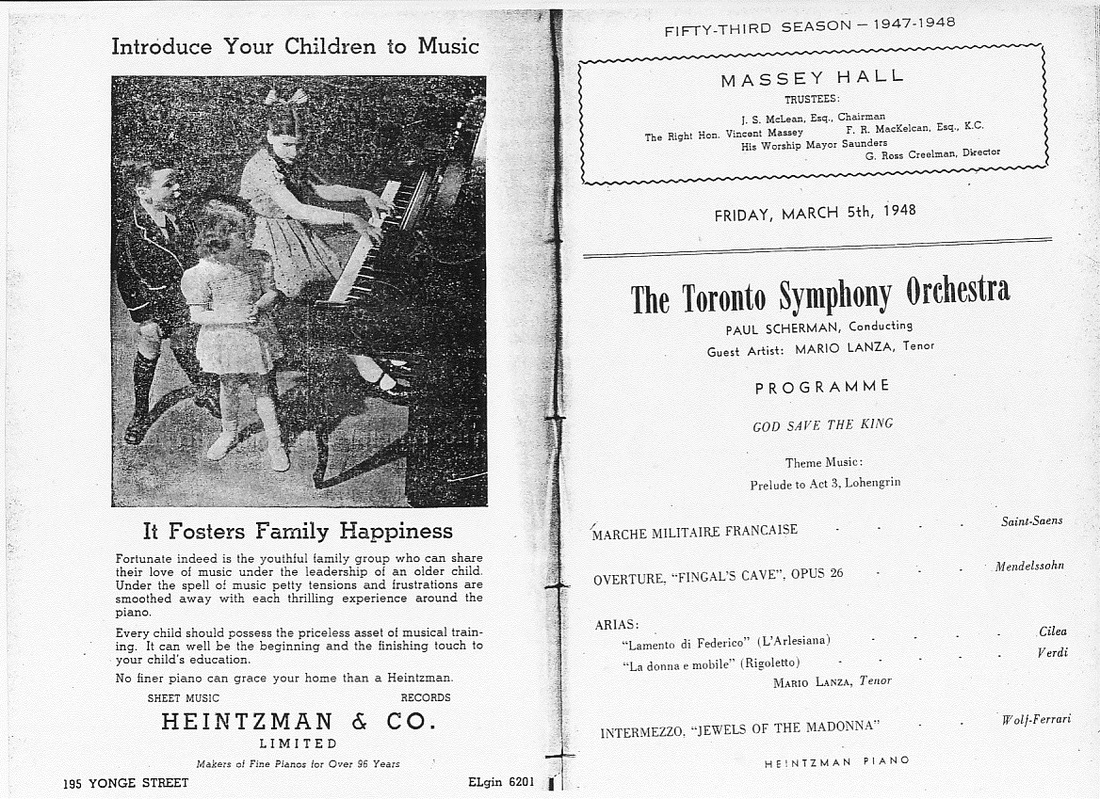
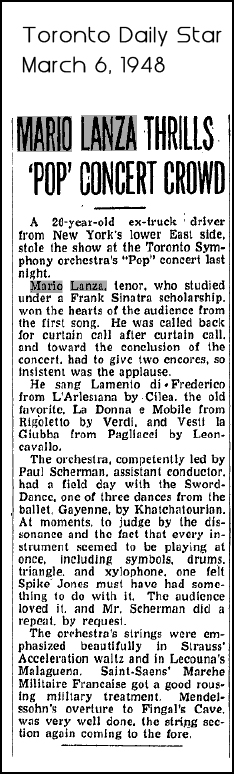
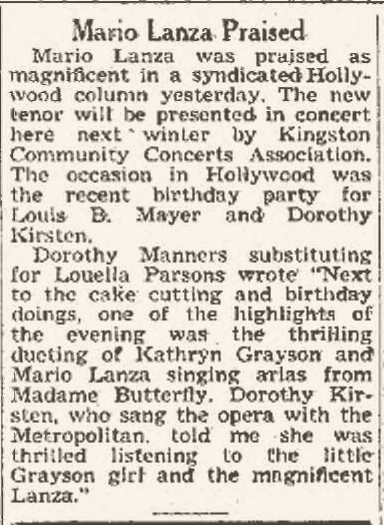
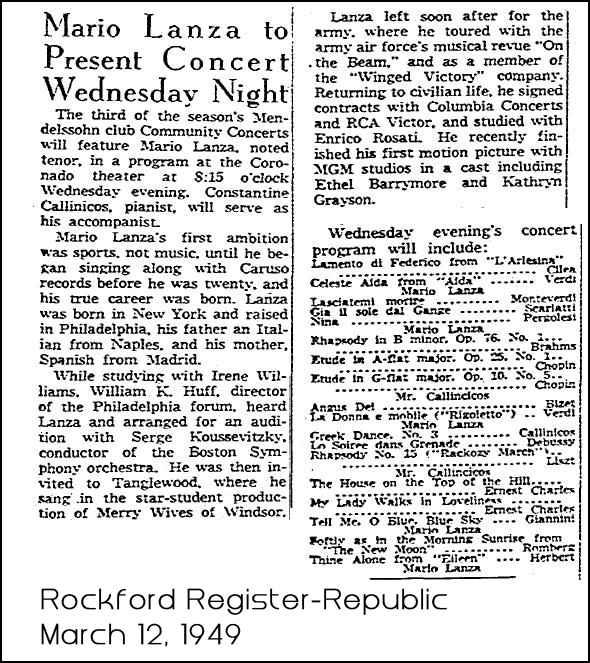
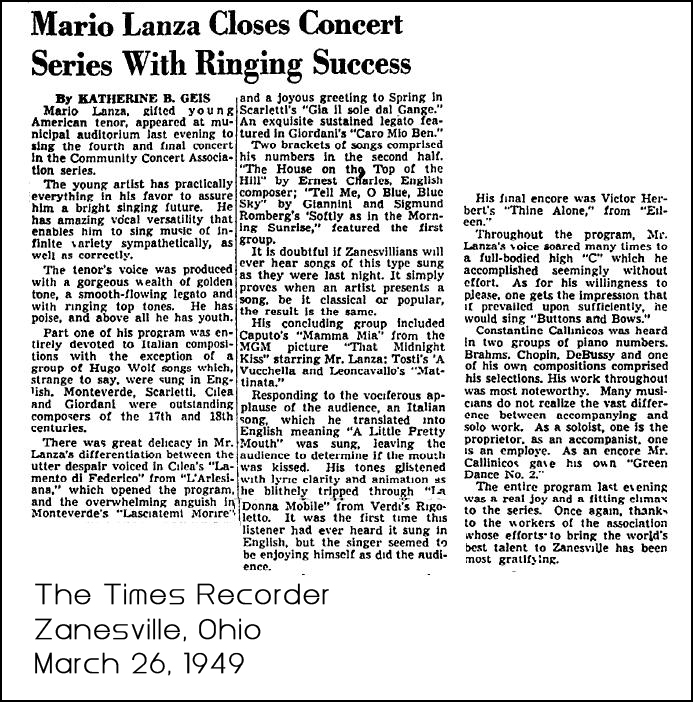
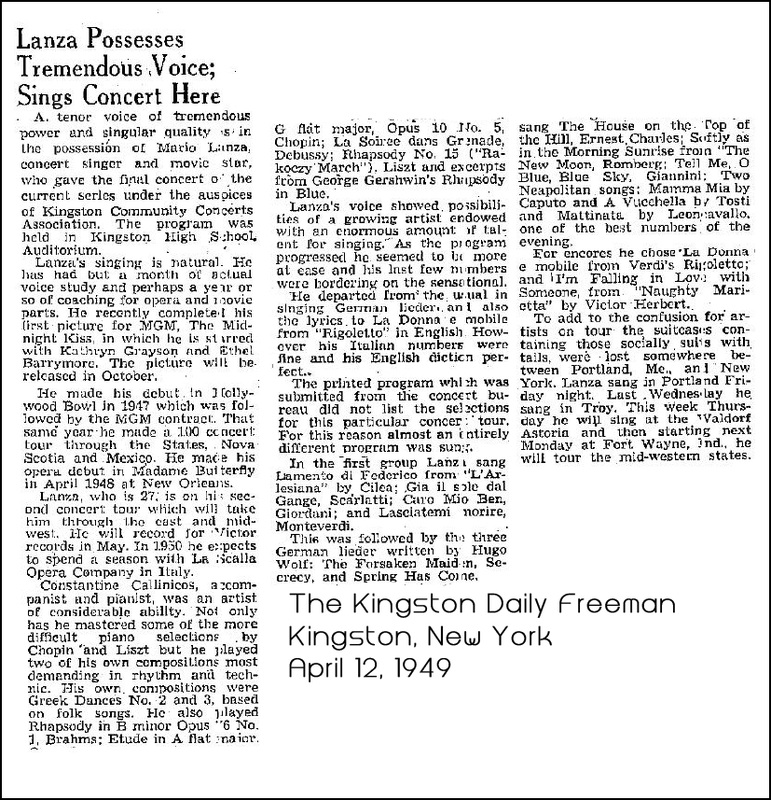
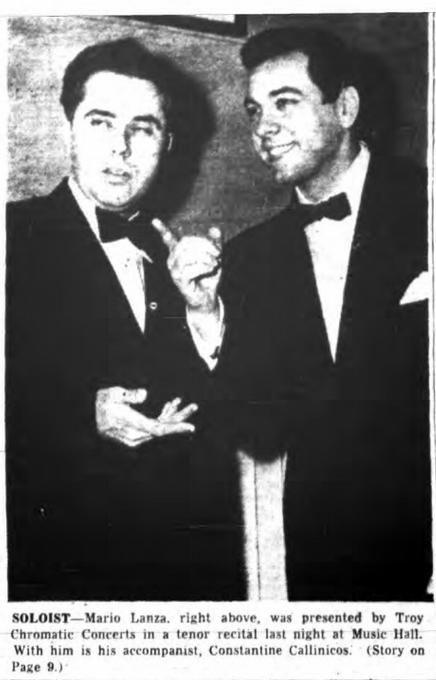
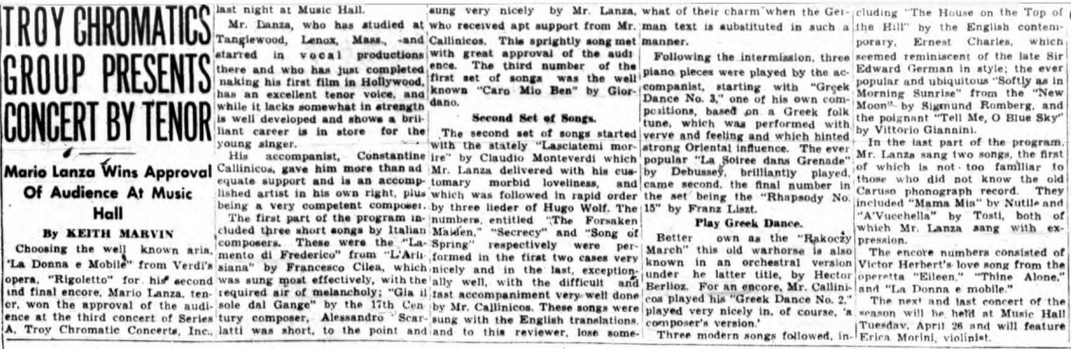
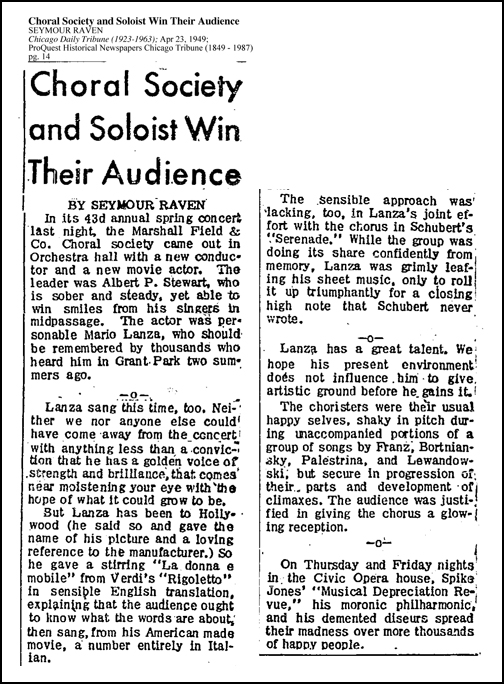
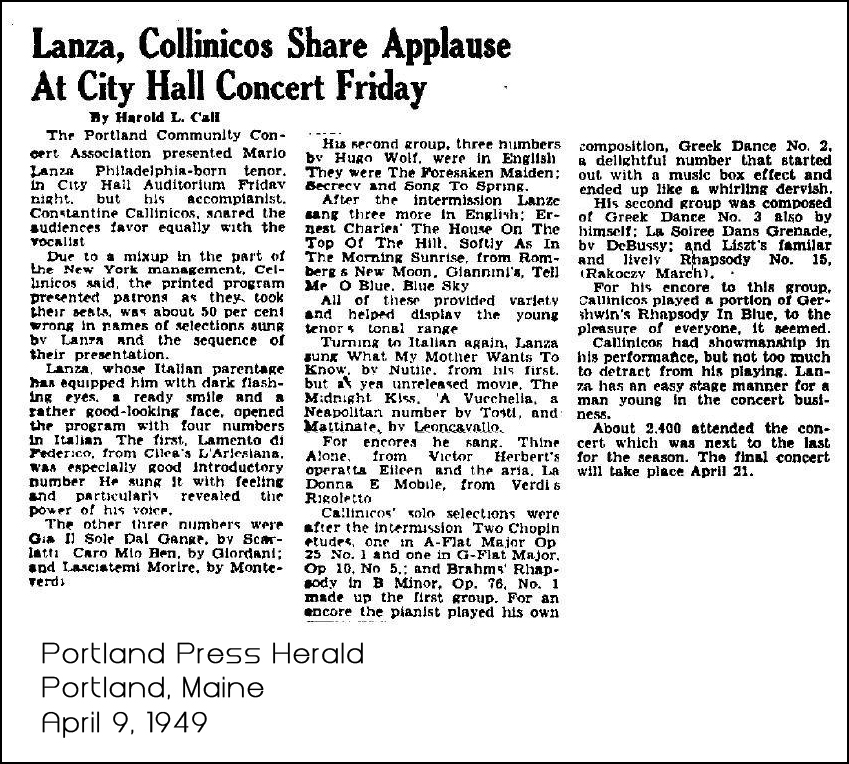
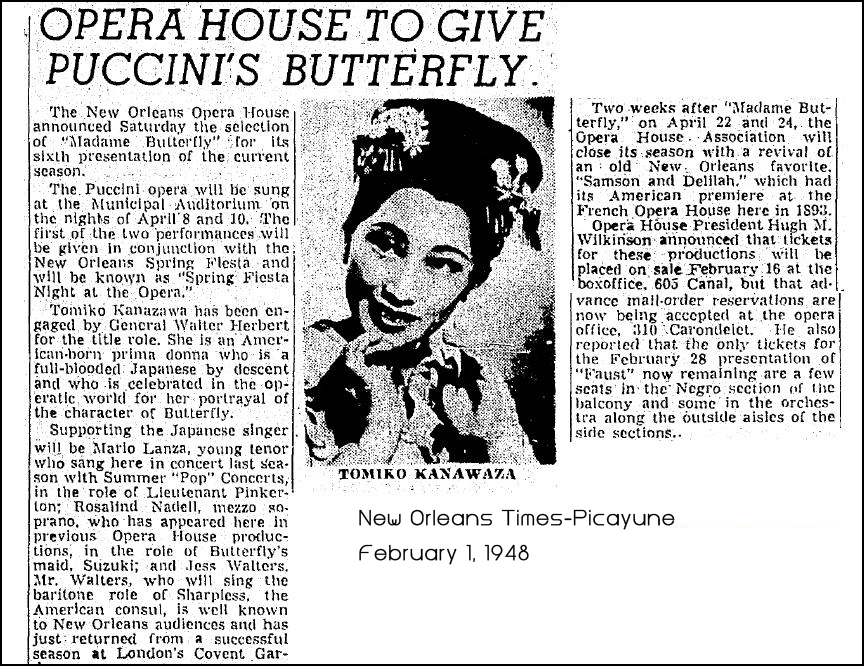
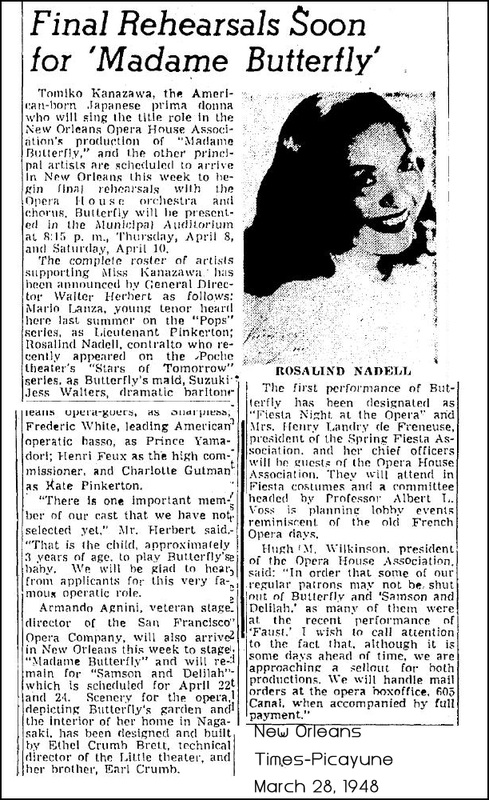
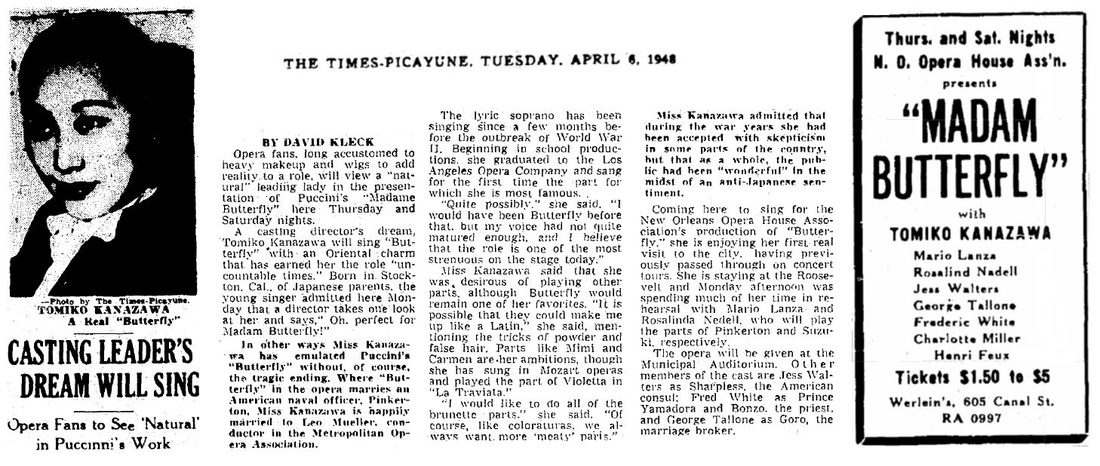
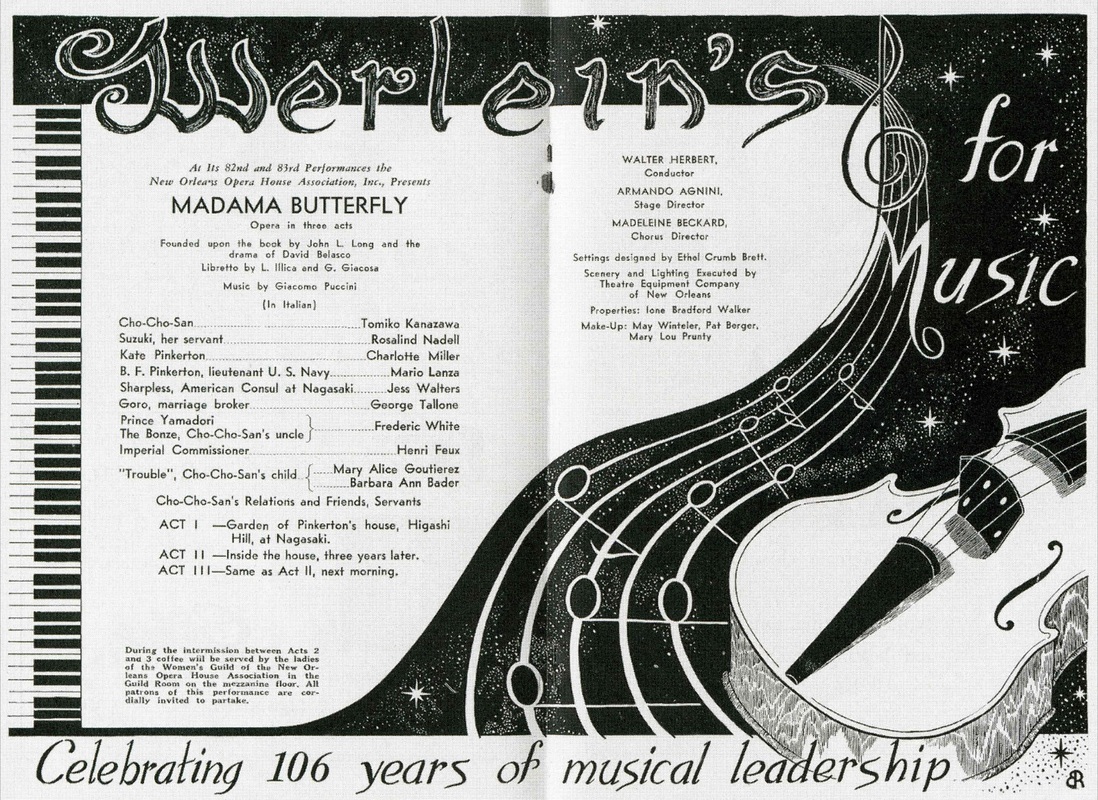
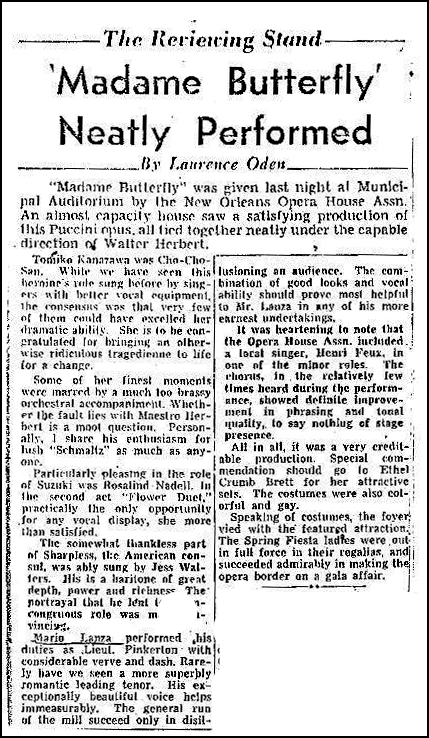
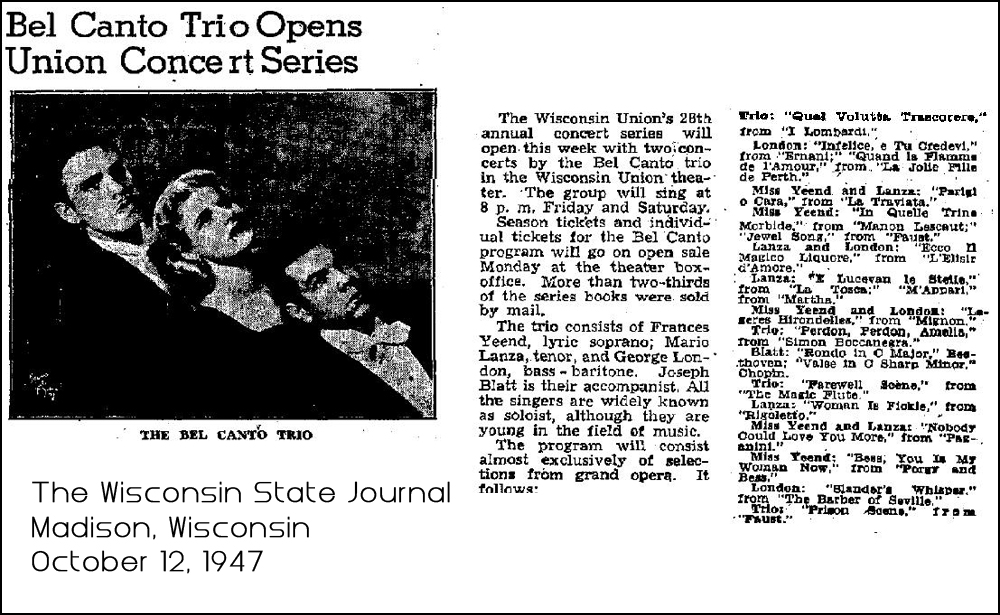
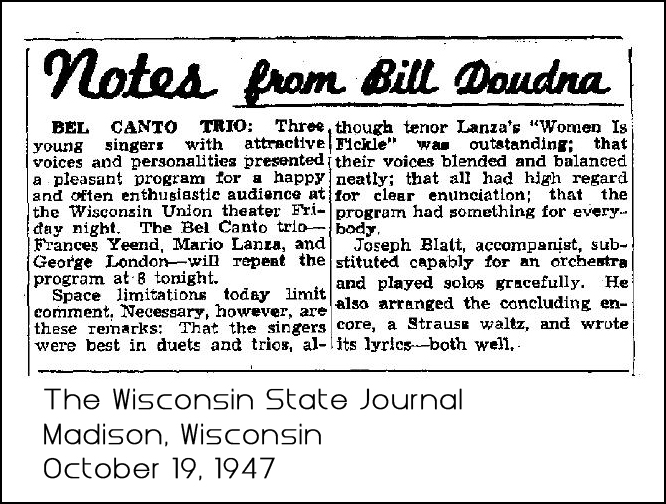
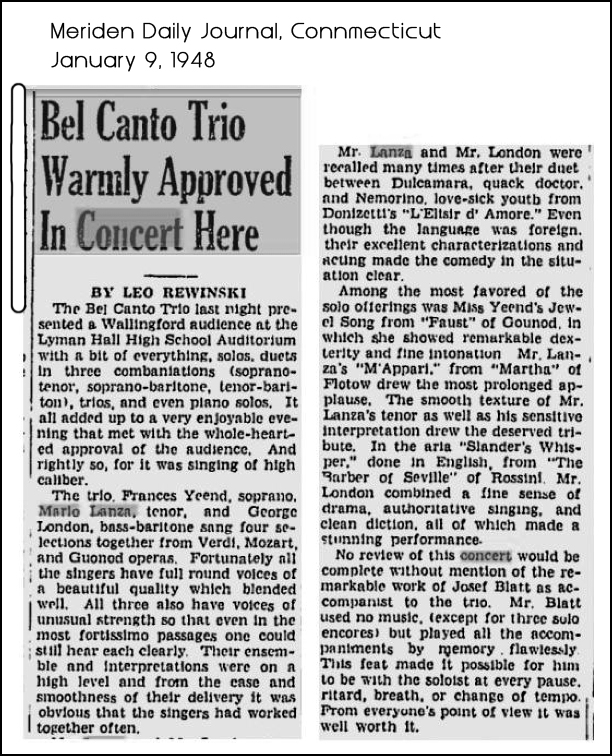
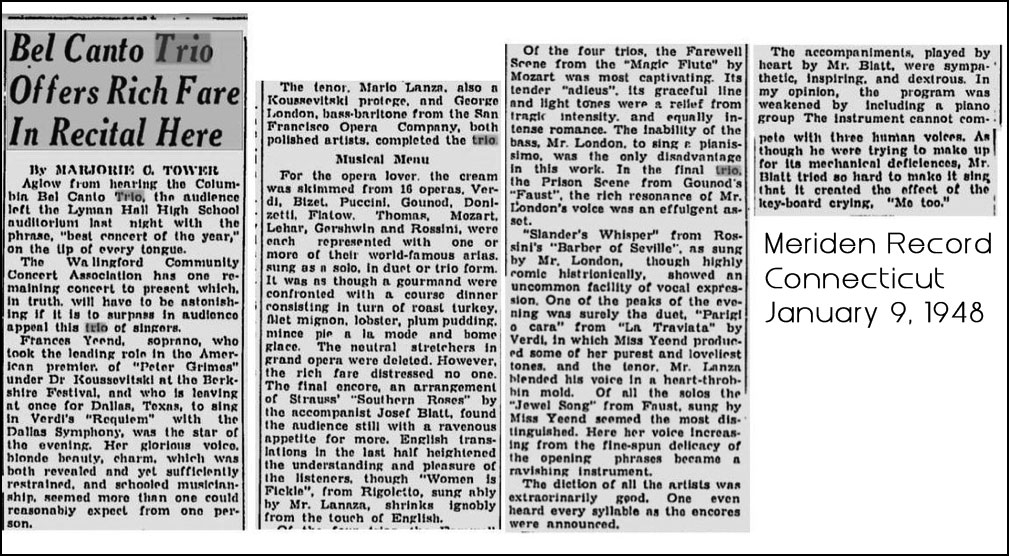
The Bel Canto Trio performed a reported 86 concerts between July 1947 and May 1948, a period during which Lanza also studied and performed the role of Pinkerton in Puccini's Madama Butterfly with the New Orleans Opera Association. In June 1948, Lanza appeared in concert in San Rafael with Metropolitan Opera soprano Dorothy Kirsten. His solo concert career also flourished during this period, and from March to May 1949 he embarked on a well-received tour that included performances with the Oklahoma Symphony Orchestra under conductor Victor Alessandro and an appearance at Chicago Orchestra Hall.
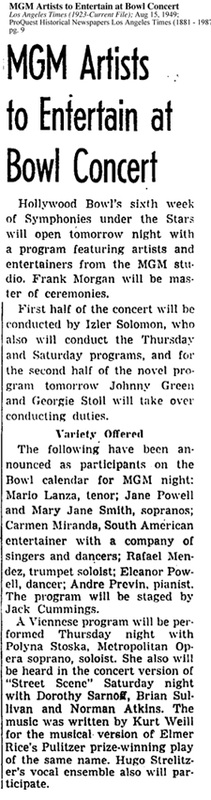
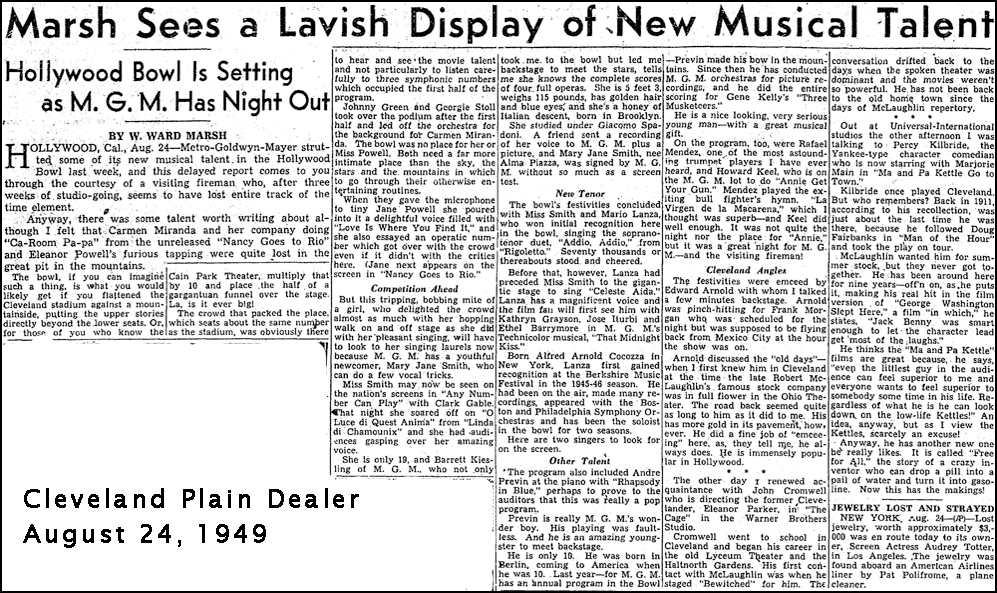
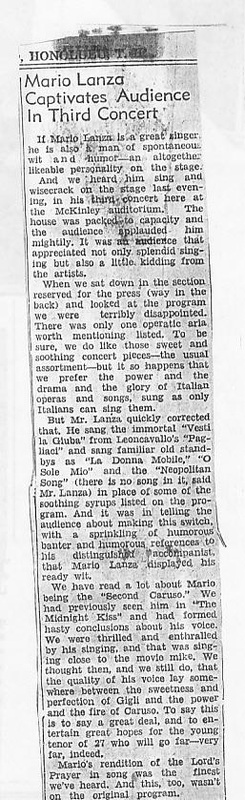
By this time, Lanza had also begun his film career, but for the time being, at least, he was able to alternate between Hollywood and the stage, even travelling as far afield as Honolulu, where he gave three sold-out recitals in March 1950.
Around the same time, Lanza joined the former Rome Opera tenor Rodolfo Pili's Apollo Grand Opera Company and YMCA Opera Company, subsequently performing in various operas under Pili's direction at venues around Philadelphia, including the Town Hall and churches. One of these was Crispino e la Comare, an 1850 work by Federico and Luigi Ricci (with a libretto by Verdi's regular collaborator, Francesco Piave), in which Lanza performed the lead tenor role of the Contino del Fiore opposite local soprano Antoinette Pescrilli, reportedly to "huge success" (source: Marion Benasutti, "The Lanza Story, Chapter 14: When the Twain Did Meet," Italian-American Herald, 13 July 1961).
Between April and June 1942, Lanza gave at least three concerts, appearing in both Philadelphia and in Atlantic City, where he sang alongside seasoned performers such as soprano Josepha Chekova and contralto Anne Simon. However, it was an audition for Serge Koussevitzky, renowned conductor of the Boston Symphony Orchestra, in March of that year—and the venerable maestro's granting of a scholarship to study at the prestigious Berkshire Music Festival in Tanglewood—which exposed the young tenor to some of the top music critics in the USA. In August 1942, Lanza appeared in the role of Fenton in two staged performances of Nicolai's 1849 comic opera The Merry Wives of Windsor at the Berkshire Festival, where he earned critical raves.
An operatic career seemed a certainty, but Lanza had not reckoned on conscription into the US Army. From 1943 to 1945 he performed in the Army's Special Services, appearing initially as a featured performer in the variety show On the Beam and then as a chorus member in the musical play Winged Victory.
Resuming his concert career in 1945 with appearances with the NBC Symphony Orchestra under conductor Peter Herman Adler and the Boston Symphony Orchestra under Arthur Fiedler, Lanza was at the same time acutely aware of the need to develop a secure vocal technique. The legendary voice teacher Enrico Rosati proved the answer to his prayers, and fifteen months of intensive study followed. Although Lanza still performed occasional concerts during this period throughout the US and also in Canada—both as a solo performer and with sopranos Frances Yeend and Carolyn Long—it was not until July 1947, when he teamed up with Yeend and bass-baritone George London to form the Bel Canto Trio, that the now vocally secure tenor began performing on a regular basis.
The Bel Canto Trio performed a reported 86 concerts between July 1947 and May 1948, a period during which Lanza also studied and performed the role of Pinkerton in Puccini's Madama Butterfly with the New Orleans Opera Association. In June 1948, Lanza appeared in concert in San Rafael with Metropolitan Opera soprano Dorothy Kirsten. His solo concert career also flourished during this period, and from March to May 1949 he embarked on a well-received tour that included performances with the Oklahoma Symphony Orchestra under conductor Victor Alessandro and an appearance at Chicago Orchestra Hall.
By this time, Lanza had also begun his film career, but for the time being, at least, he was able to alternate between Hollywood and the stage, even travelling as far afield as Honolulu, where he gave three sold-out recitals in March 1950.