Mario Lanza: A Radical Reassessment
A Biographical Essay by Derek McGovern
Part III
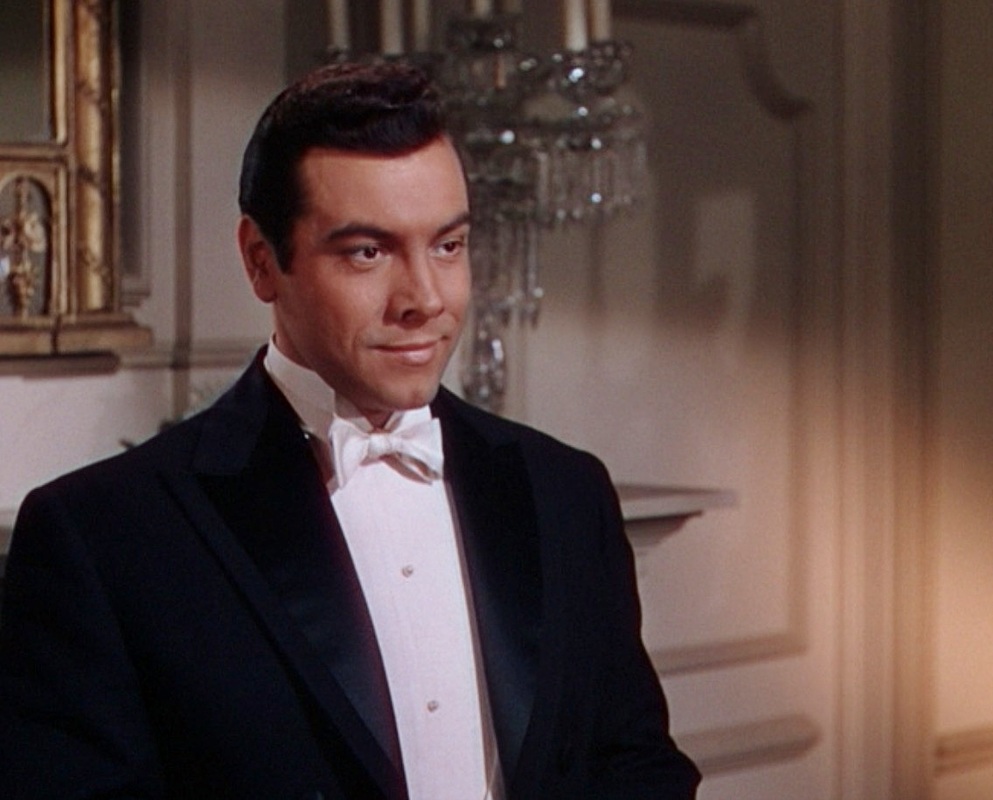
Lanza in The Toast of New Orleans, 1950

Suddenly Lanza was no longer a performer known only to the concert and opera-going public, but a bona fide Hollywood and recording star. For a man who had always struggled with self-discipline, the pressures of fame would prove an enormous distraction. As Cesari observes:
To develop properly, Lanza needed the strictest of artistic environments—working with the best conductors, musicians and coaches--all the while learning and perfecting his art. Hollywood could provide none of this. In the fanfare and glitter of the celluloid capital, Lanza would never be able to find the peace and solace--let alone the time required—for the study of new repertoire.
The Great Caruso
His stylistic lapses were also regularly dissected: "Lanza shouts," "Lanza over-emotes," and so forth. Critics such as John Freestone of Gramophone—who had previously hailed Lanza as a singer "worthy of serious consideration"—began adopting a patronizing approach to reviews of "the film star's" recordings. Unable to accept that any serious singer could possibly be so popular, critics increasingly dismissed Lanza as an unworthy operatic contender.
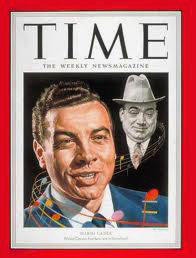
Time Magazine, 6 August 1951
Time Magazine also joined the fray in an anonymously written 1951 cover article that not only criticized Lanza’s singing style and smugly predicted his vocal demise, but mocked his weight problem, intellect and personal habits. Ad hominem attacks by other magazines and tabloid newspapers thereafter became a regular event. For a man who was deeply sensitive beneath the outward bravado, the negative publicity must have been devastating.
Enrico Caruso, Jr. on Lanza
I can think of no other tenor, before or since Mario Lanza, who could have risen with comparable success to the challenge of playing Caruso in a screen biography. . . . It was Lanza who made the film a success.
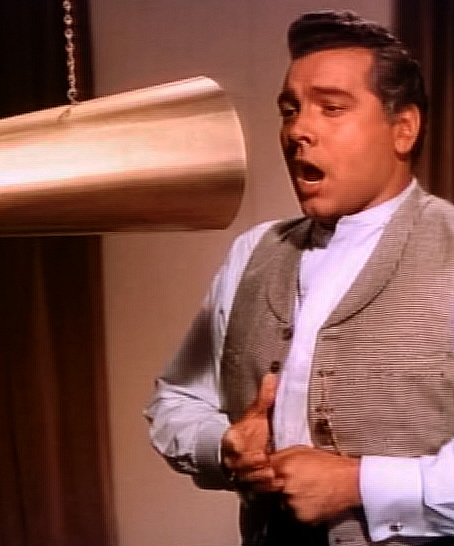
Lanza as Caruso
Mario Lanza was born with one of the dozen or so great tenor voices of the century, with a natural voice placement, an unmistakable and very pleasing timbre, and a nearly infallible musical instinct. His diction was flawless, matched only by the superb Giuseppe Di Stefano. His delivery was impassioned, his phrasing manly and his tempi instinctively right. All are qualities that few singers are born with and others can never attain.
Insecurity
Indeed, Lanza was no longer the confident young tenor who had arrived in Hollywood four years earlier, declaring his dream of singing Rodolfo in La Bohème with Licia Albanese, Leonard Warren, and Ezio Pinza. Former MGM General Music Director John Green recalled this period:
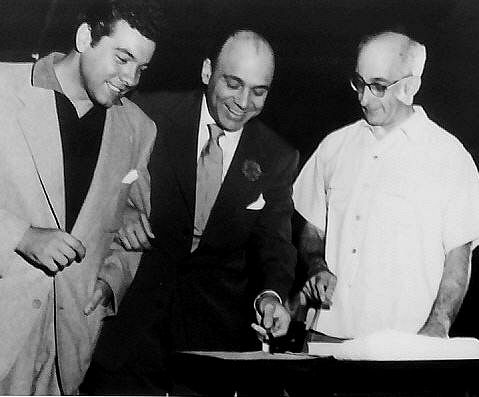
With John Green (center) and Peter Herman Adler, 1950
Operatic Offers
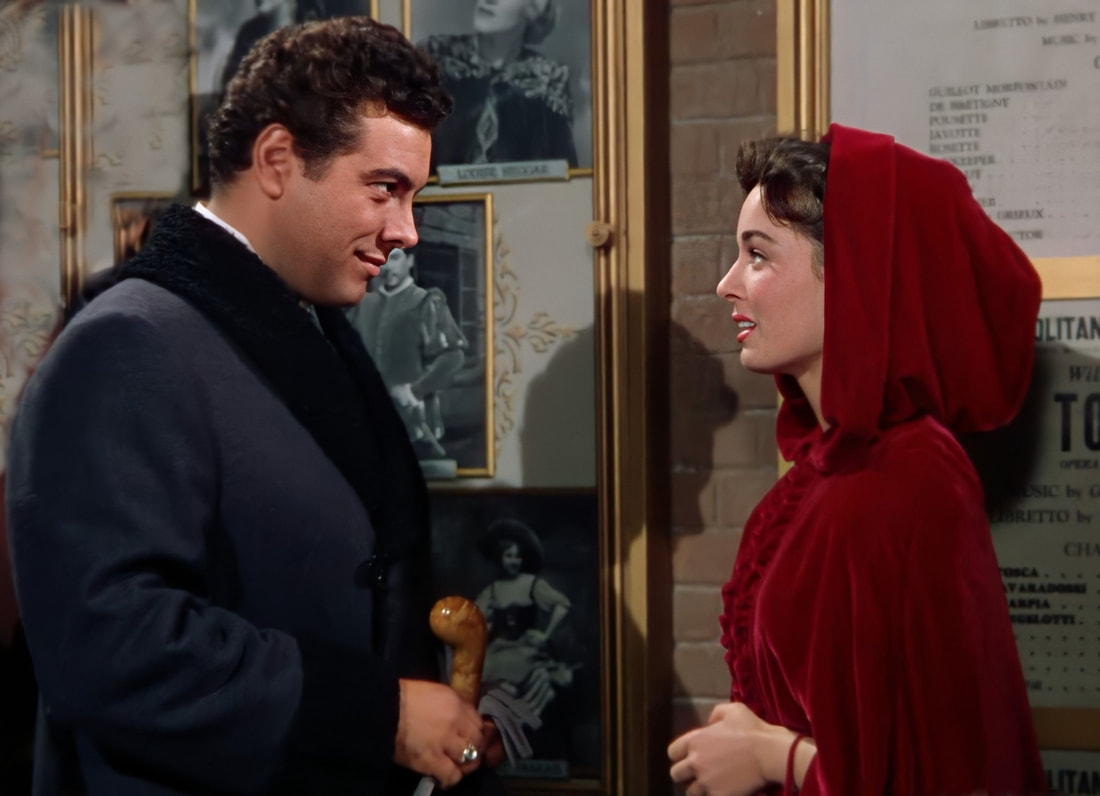
With Ann Blyth in a publicity photo for The Great Caruso
Closer to home, Gaetano Merola, Music Director and Principal Conductor of the San Francisco Opera, also offered him the role of Chénier, convinced that Lanza had the potential to become another Caruso. On this occasion, performances were tentatively scheduled for October 1950, but Lanza later withdrew, pleading other commitments and the approaching birth of his second child. "I'm only 29," he reportedly told Merola. "There is lots of time."
In my opinion, Lanza, with the possible exception of Bjoerling, had the greatest voice of his time. His singing could move people to tears and, in my presence, frequently did. His Hollywood experience undermined his inner security, which is why he avoided performing in public. I would venture that if he had not gone to Hollywood he would, at least for the beginning, have had a major operatic career.
The Break-Up with MGM
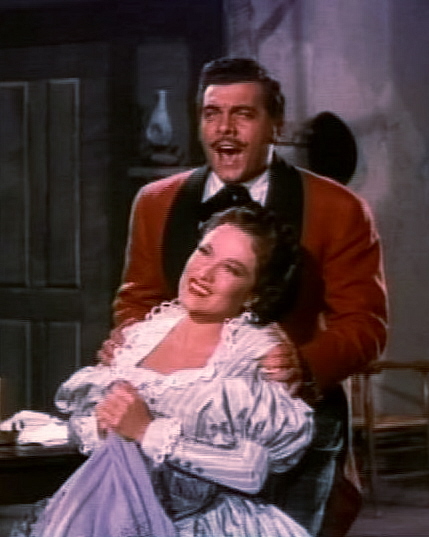
With Dorothy Kirsten in The Great Caruso
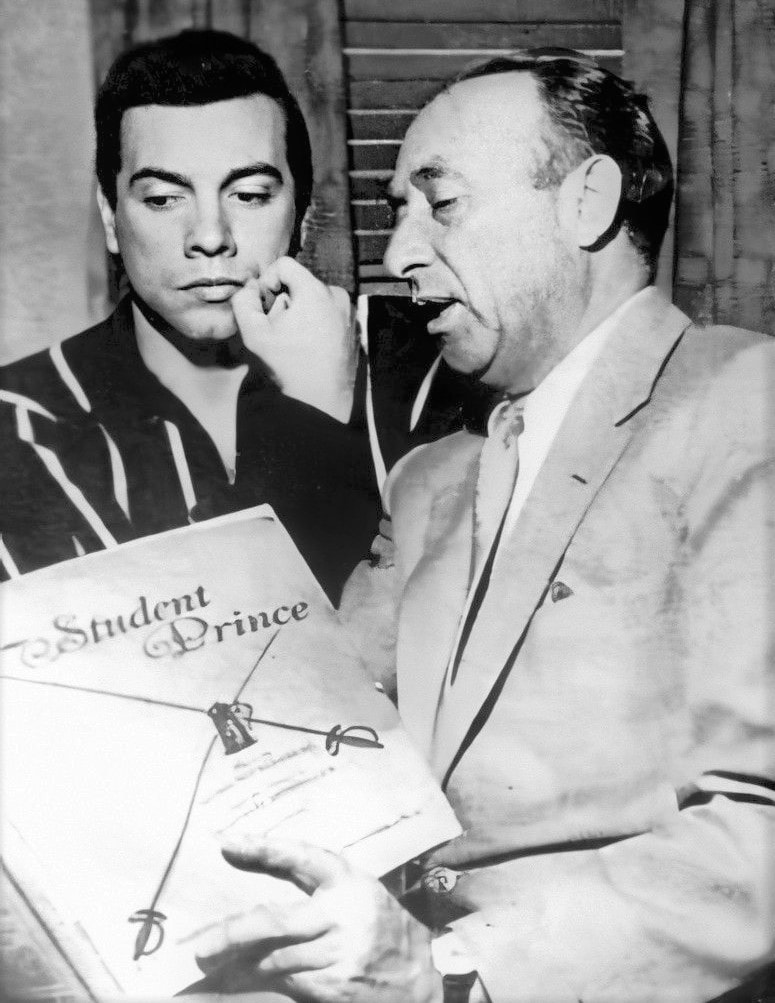
With MGM producer Joe Pasternak, 1952
Among those dissenting voices had been Mayer's replacement, Dore Schary, a man with no interest in film musicals and with whom Lanza repeatedly clashed during the pre-production period of his fourth movie, Because You're Mine, in 1951. (Lanza considered the film, with its predictable plot concerning an opera star drafted into the Army, an unworthy successor to The Great Caruso.)