A Mario Lanza Musical Who's Who
Mini-Biographies of Musicians, Coaches, Opera Producers, and Selected Singers Associated with Mario Lanza
During the course of his brief career, Mario Lanza collaborated with numerous musical personalities. These included such renowned opera singers as sopranos Licia Albanese and Dorothy Kirsten, mezzo-soprano Blanche Thebom, and bass-baritone George London. Comments from these and other singers who worked with the tenor (or heard him in person) can be read here.


Irving Aaronson with Lanza on the set of Because You're Mine, Jan. 1952

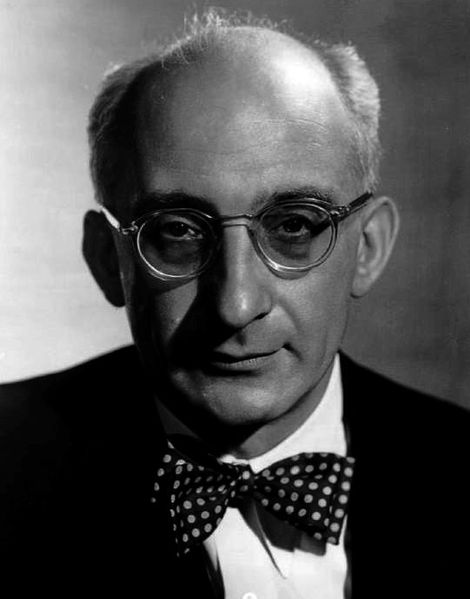
Adler was noted for his nurturing of promising operatic singers, including bass-baritone George London (1920-1985), soprano Leontyne Price (1927- ), and Mario Lanza, with whom he first worked in 1945. Shortly after conducting Lanza in September of that year at a concert at Convention Hall, Atlantic City with the NBC Symphony Orchestra, Adler said of the young tenor: “I think this boy has the greatest inherent, instinctive musicality I have ever seen.” At Lanza's request, Adler later conducted most of the musical selections featured in the tenor's third film, The Great Caruso.
In the summer of 1959, shortly before Lanza's death, Adler visited the tenor in Rome, promising “all possible help” in the latter's planned return to opera (“his only true love”) provided that he could first apply some discipline to his erratic lifestyle. 24 years later, Adler appeared on the 1983 PBS documentary Mario Lanza: The American Caruso, arguing that “[Lanza] had what Caruso had,” and praising the “tremendous vitality” of his singing, coupled with “the most brilliant, broad, natural voice—[a voice] without limitation.”

Armando Agnini directing Lanza (with Kathryn Grayson observing) in the Butterfly sequence of The Toast of New Orleans, 1950

Agnini directed the 1948 New Orleans Opera Association production of Puccini's Madama Butterfly, in which Lanza made his professional operatic debut (as Pinkerton), appearing alongside soprano Tomiko Kanazawa (1915-2020), mezzo-soprano Rosalind Nadell (1922-?), and baritone Jess Walters (1908-2000). At Lanza's request, Agnini also directed the Madama Butterfly sequence in the 1950 MGM film The Toast of New Orleans, in which Lanza co-starred with Kathryn Grayson (1922- 2010).
Esteemed vocal coach Leila Edwards (who taught Lanza the role of Pinkerton for the New Orleans Opera production) said of Agnini: "I learned personal patience from watching him at work. He gave the same careful, sincere attention to the beginner in acting as he did to the Met singers. We must have given hundreds of lessons with the opera La Traviata, and never once did I see him show a trace of boredom. Above all, his attitude was kindly. He worked with the talent the pupil showed and never imposed his will. He guided; he suggested."
Side note: As a younger man, Agnini had known composer Giacomo Puccini on a personal level, even living with him for a period.
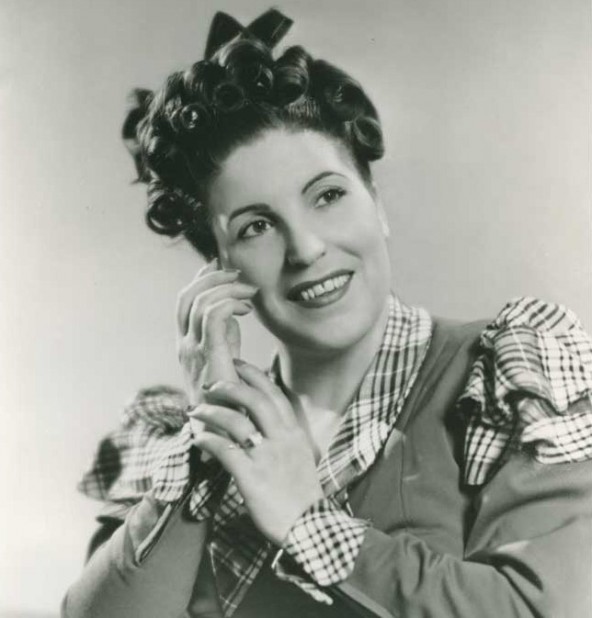
During her distinguished career, which also included performances at La Scala, she sang opposite many of the leading tenors of her time, including Beniamino Gigli (1890-1957), Jussi Björling (1911-1960) and Franco Corelli (1921-2003), and with such renowned conductors as Arturo Toscanini (1867-1957) and Gaetano Merola (1881-1953).
On two occasions (1945 and 1950), Lanza was tentatively scheduled to sing opposite her in stage productions of Puccini's Madama Butterfly and Giordano's Andrea Chénier, respectively. The two singers finally collaborated in 1955, when they recorded the Act III duet “Dio Ti Giocondi” from Verdi's Otello for the 1956 Warner Bros. film Serenade. Albanese also appeared (as herself) in the film with Lanza in a brief extract from the duet (which can be heard in full on the 1999 BMG CD Mario Lanza: Opera Arias and Duets and the 2022 Sepia Records CD The Electrifying Mario Lanza.
Albanese remained throughout her life one of Lanza's most ardent admirers, and in 1980 told biographer Armando Cesari that she ranked the tenor (vocally) “next to [Enrico] Caruso.”

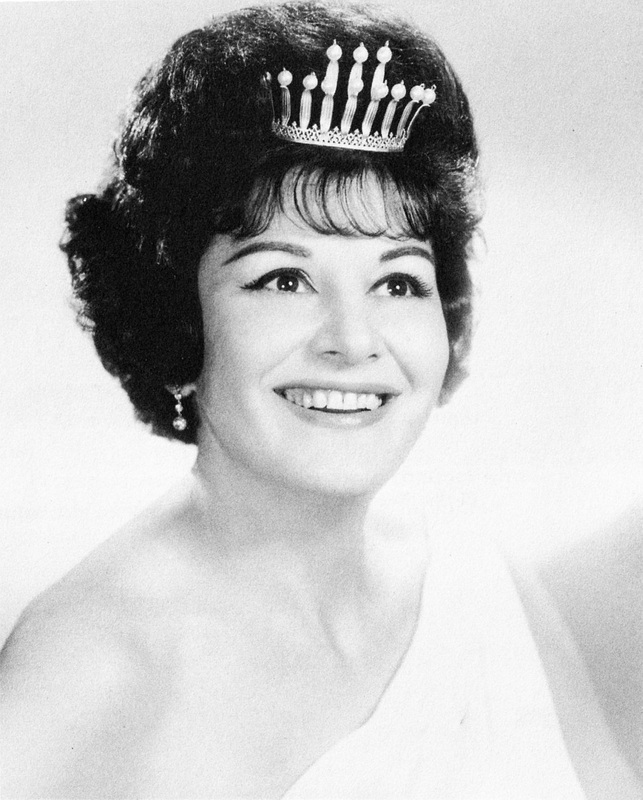

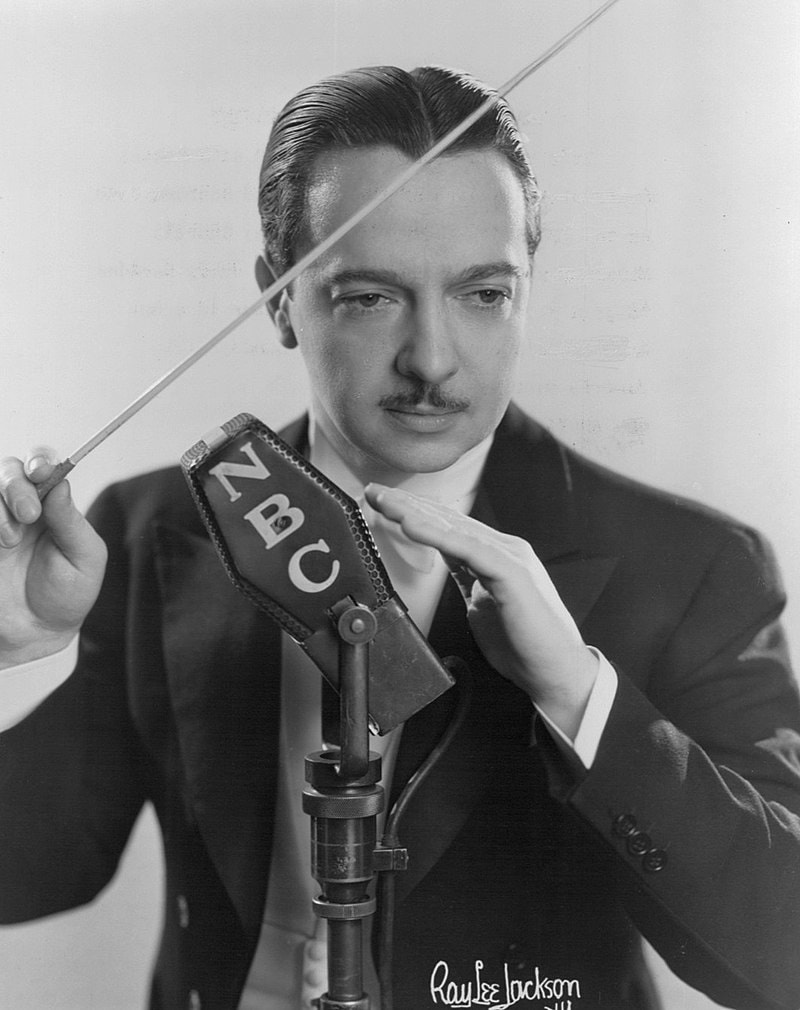


In an unprecedented move, the previous afternoon's rehearsal was also opened to the ticket-buying public, prompting the Pittsburgh Press to report on the “near riot” that occurred when Lanza threw his handkerchief into the audience after concluding “Be My Love.” (The amused tenor later told the Pittsburgh Post Gazette that a frustrated Bakaleinikoff had told the audience, "Dis iss symphony orchestra. You must be verrry quiet. Shadup!") Time magazine subsequently wrote of the actual concert that, “In arias from Rigoletto and Pagliacci, Mario proved to the cynics' surprise that he really has a voice.”
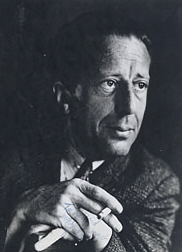
He conducted Lanza and soprano Carolyn Long in four concerts in 1947: three with the Summer Pop Orchestra at the New Orleans Municipal Auditorium in June, and a fourth concert, presumably with the Cedar Rapids Symphony Orchestra (later renamed Orchestra Iowa), in Grinnell, Iowa, in October 1947. For these concerts, Lanza departed from his standard program at the time by singing duets and songs from a number of operettas, including The Student Prince, The Vagabond King, Maytime and New Moon, in addition to various operatic arias and duets. In a review of the second New Orleans concert, which took place on June 26th, reviewer Eleanor Nicholson of the Times-Picayune singled out Lanza for praise, noting that his singing of the aria “Cielo e Mar” elicited bravos from the enthusiastic audience, and that his rendition of “Yours Is My Heart Alone” even “necessitated two encores.”
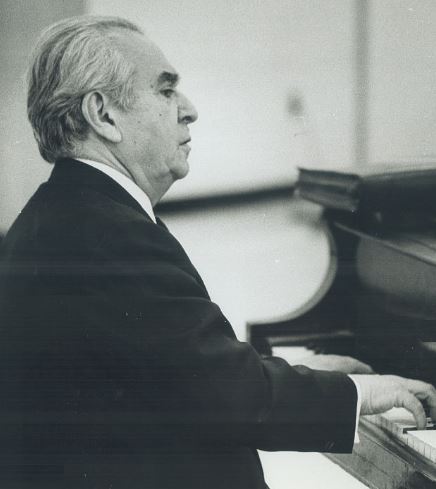
Leo Barkin, 1971


He was subsequently dismissed from his position after the courts determined that he had plagiarized the music to the popular calypso song "Rum and Coca-Cola," a hit for the Andrews Sisters in 1945. Baron then relocated to Rome, where he renewed his acquaintance with Lanza in 1957, and was soon working for the tenor in a variety of capacities: as pianist on The Christophers, a religious program that Lanza performed on (and was also interviewed on) in October 1957; as associate producer on the 1958 film For the First Time; and as conductor on three RCA albums between April and June 1959: The Student Prince, Lanza Sings Christmas Carols, and Mario Lanza Sings Caruso Favorites. Baron also arranged a number of songs for the tenor, including three from the well-regarded Caruso Favorites album (“Vaghissima Sembianza,” “Serenata,” and “Luna d'Estate”). He was eventually dismissed by Lanza after attempting to persuade the tenor to award him 15% of his future income in return for his conducting services.
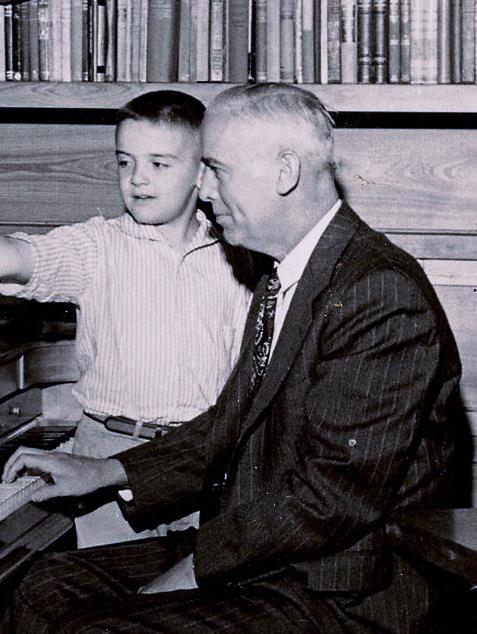
Lawrence Bernhardt with his son Warren (photo courtesy of pianist Warren Bernhardt)


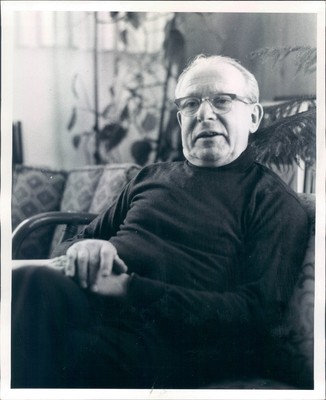
Josef Blatt in 1973
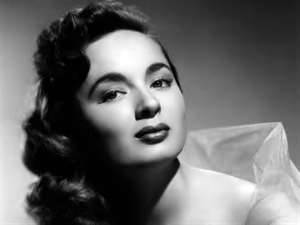


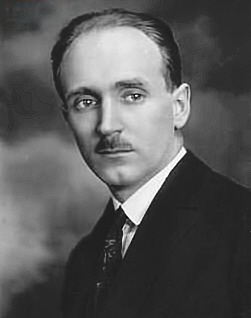
Jerzy Bojanowski in the early 1930s
It was with this orchestra that Bojanowski conducted the Bel Canto Trio—consisting of Mario Lanza, soprano Frances Yeend and bass-baritone George London—at their first concert (of a subsequent ten-month tour), which took place in Washington Park, Milwaukee, on July 8th, 1947 before an audience of 6000.
Reviewing the concert the next day in the Milwaukee Sentinel, Edward P. Halline gave high praise to all three singers, but singled out Lanza as "the most impressive of all, with just the kind of voice that is needed to get all the drama out of such emotionally charged arias as 'E lucevan le stelle' from Puccini's Tosca and 'Celeste Aida' from Verdi's Aida. The audience roared its appreciation, vainly demanding an encore."
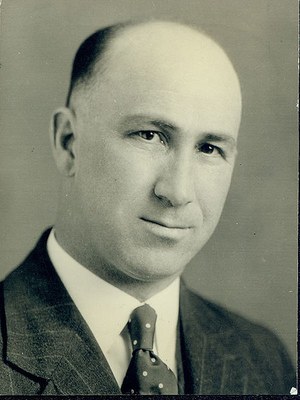
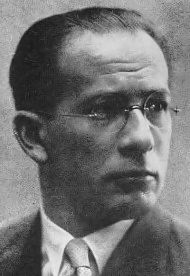
Breisach conducted the Bel Canto Trio (comprising Lanza, Frances Yeend and George London) with the Grant Park Symphony Orchestra at two extremely well-received concerts at Grant Park, Chicago, on July 19 and 20, 1947. An estimated 131,000 people were in attendance over the two nights. Reviewing the first of the concerts, esteemed critic Claudia Cassidy wrote in the Chicago Sunday Tribune that, "Mr. Lanza sings for the indisputable reason that he was born to sing. He has a superbly natural tenor that he uses by instinct, and though a multitude of fine points evade him, he possesses the things almost impossible to learn. He knows the accent that makes a lyric line reach its audience, and he knows why opera is music drama."

Lanza with lyricist Sammy Cahn (left) and Nicholas Brodszky, 1955

He composed thirteen songs for Lanza's films, ten of which were written with lyricist Sammy Cahn (1913-1993), including the tenor's first- and third-million-selling singles (“Be My Love” and “Because You're Mine”), and three with lyricist Paul Francis Webster (1907-1984) for the 1954 film version of The Student Prince (“Summertime in Heidelberg,” “Beloved,” and “I'll Walk with God”). Although the quality of the songs Brodszky wrote for Lanza's films varies starkly from the sheer triteness of ditties such as “Boom Biddy Boom” to the operetta-like “Be My Love,” his best efforts arguably inspired some of the tenor's finest and most impassioned singing in English. Whether or not allegations that he depended on a team of uncredited collaborators (including composer Mischa Spoliansky) to complete his songs are true, Brodszky undoubtedly possessed a gift for fashioning melodies that skillfully exploited Lanza's range and vocal expressiveness.

Constantine Callinicos (left) and Mario Lanza, 1949

Callinicos consequently served as the tenor's accompanist on three tours (1949, 1951, 1958), together with three concerts in Honolulu in 1950. He also conducted Lanza's two appearances at the London Palladium in 1957, and wrote the song “You Are My Love” for Lanza. His other collaborations with the tenor included conducting all of Lanza's operatic recordings for RCA---and many of the arias on his weekly radio show---together with the operatic material featured in the film For the First Time, assorted songs recorded for RCA 1949-1953 and again in 1957, the score of the MGM film The Student Prince, and two albums in 1959 (The Vagabond King and The Desert Song).
One of the most controversial of Lanza's associates, Callinicos has been revered in some circles (e.g. by biographer Derek Mannering, who describes his contribution to Lanza's career as “well-nigh inestimable”) and criticized by others, most notably Armando Cesari, who argues in Mario Lanza: An American Tragedy (Baskerville, 2004; 2nd ed. 2008) that the conductor was both a mediocre conductor and accompanist, as well as an opportunist. Callinicos wrote The Mario Lanza Story with Ray Robinson (Coward-McCann, 1960), an often-critical and error-ridden account of the tenor's life.

On April 5, 1942, Chekova performed with the 21-year-old Lanza at one of the latter's first concerts. The venue was the Vernon Room in Haddon Hall, Atlantic City, and the pair reportedly performed duets from Puccini's Tosca and Mascagni's Cavalleria Rusticana. Ms. Chekova was arguably well suited (temperamentally) to the soprano roles in both those operas, for six years earlier she had publicly clashed with San Carlo Opera Company conductor Carlo Peroni during a performance as Musetta in Puccini's La Bohème in Los Angeles. Infuriated by Peroni's audible cries of "Stupid! Stupid!" during Act II (directed at what he later claimed were her missed cues) and his attempts to sing along with her during her aria ("Musetta's Waltz"), Chekova tried to hit Peroni backstage before the third act. San Diego's Evening Tribune subsequently reported that she resigned from the Company the next day.
Side note: Chekova, who was married to Czechoslovakian concert manager and former tenor Vladimir Domansky (1896-1968), can be heard in duet with baritone Dennis King on a 1929 recording of "Love Me Tonight" from Friml's The Vagabond King. Thirty years later, Lanza would also record the same song (in solo form).
Plinio Clabassi, c. 1958

According to biographer Derek Mannering (in Mario Lanza: Singing to the Gods, p.15), Lanza sang four solo numbers (one or more of which was presumably accompanied by Metropolitan Opera pianist Stuart Ross, who also performed) at an Easter Sunday concert in the Vernon Room at Haddon Hall. These were “Ombra Mai Fu” from Handel's Xerxes, “Ch'Ella Mi Creda” from Puccini's La Fanciulla del West, “È la Solita Storia” from Cilea's L'Arlesiana (an aria that would later become a mainstay of the tenor's recital and concert program), and “Come un Bel Dì di Maggio” from Giordano's Andrea Chénier. Together with soprano Josepha Chekova, Lanza also performed duets from Puccini's Tosca and Mascagni's Cavalleria Rusticana at this concert.