A Mario Lanza Musical Who's Who
by Derek McGovern
Mini-Biographies of Musicians, Coaches, Opera Producers, and Selected Singers Associated with Mario Lanza

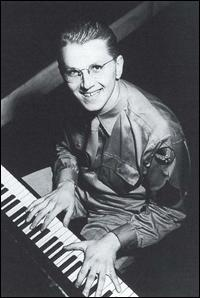
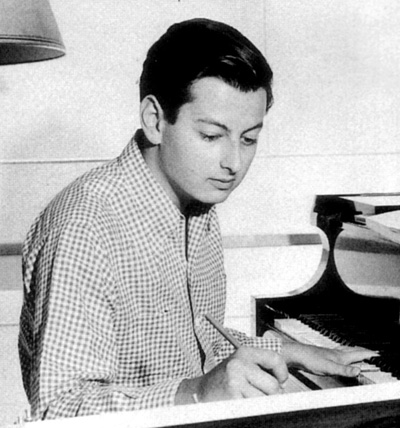
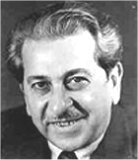

Johannes Rediske (far right) and his Quintet with Lanza, November 1958


Reiter conducted the Bel Canto Trio (comprising Lanza, soprano Frances Yeend and bass-baritone George London) at a well-received concert with the San Antonio Symphony Orchestra at the Majestic Theatre, San Antonio, Texas, on November 8, 1947. Last-minute replacements for the indisposed soprano Helen Traubel, the Trio received high praise from music reviewer Ernest Pratt of the San Antonio Light, who singled out their performance of "Qual Voluttà Trascorrere" from Verdi's I Lombardi (while also praising Reiter and his orchestra for coping admirably with this and other largely unfamiliar scenes despite only one rehearsal). More about Reiter's interesting life can be read here.


Returning to the USA in 1936, he went on to form his own orchestra, and later worked for RCA Victor as a conductor and arranger. René produced Lanza's first concept album, the disastrous Lanza in Broadway of May 1956, and then went on to conduct (successfully) the tenor's next album, Cavalcade of Show Tunes, three months later, in addition to conducting a number of singles and Christmas carols recorded by Lanza between August 1956 and April 1957.


Lanza's close friend the renowned bass-baritone George London later observed that prior to his studies with Rosati, the tenor's voice was an extremely beautiful but “unschooled” instrument. According to London, “Rosati directed [Lanza] to sing more lyrically, with less pressure, to good advantage.” The improvements in Lanza's singing, both in terms of vocal production and style, as a result of his time with Rosati can clearly be heard by comparing the tenor's (pre-Rosati) performances on the “Great Moments in Music” radio broadcasts of 1945-46 with his August 1947 Hollywood Bowl concert.
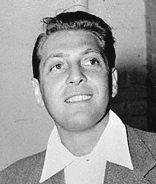
David Rose in 1941

Lanza standing between André Previn (far right) and Miklós Rózsa, July 1948

Rózsa conducted Lanza's second appearance at the Hollywood Bowl (with soprano Kathryn Grayson) on July 24, 1948, and also wrote (for the MGM film Quo Vadis?) the music for the song “Lygia,” which Lanza recorded in 1951. Among the selections that Lanza performed (magnificently) under Rózsa's direction in 1948 were Bizet's "Agnus Dei," which can be heard here, and Puccini's "Nessun dorma."

Henry Russell
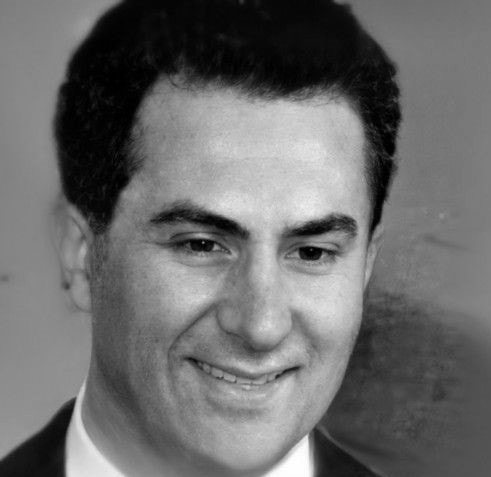
Carlo Savina in 1956
Savina conducted Lanza on three songs (“Come Prima,” “O Mon Amour,” and “O Sole Mio”) in 1958 for the soundtrack of For the First Time, in addition to arranging five of the songs on the Mario! album (“Dicitencello Vuie,” “Maria Mari',” “Fenesta che Lucive,” “Tu Ca Nun Chiagne,” “'Na Sera 'e Maggio”). He also worked as a music arranger on Lanza's sixth film, Seven Hills of Rome, the musical soundtrack of which was recorded in June 1957.
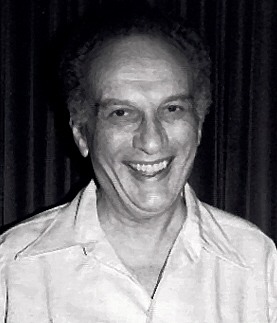
Paul Scherman in 1974
Scherman conducted Lanza at a concert with the Toronto Symphony Orchestra at Toronto's Massey Hall on March 5, 1948. Among the selections Lanza sang that evening were “La donna è mobile” from Verdi's Rigoletto, “È la solita storia” from Cilea's L'Arlesiana, and “Vesti la giubba” from Leoncavallo's Pagliacci. (These performances have survived, and Lanza's lyrical rendition of “È la solita storia” can be heard here.)
The Toronto Daily Star reported on the concert the next day, noting that, "[Lanza] was called back for curtain call after curtain call, and toward the conclusion of the concert had to give two encores, so insistent was the applause."
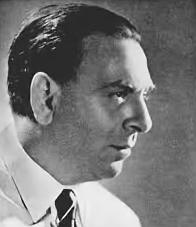
Sébastian conducted Lanza on three live radio broadcasts between October and December 1945 on the series Great Moments in Music, performing selections from Puccini's Tosca (with soprano Jean Tennyson), Verdi's Otello (with Jean Tennyson and baritone Robert Weede), and Lehmann's In a Persian Garden (with soprano Frances Yeend).
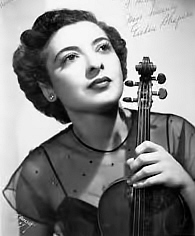

Deeply impressed by the tenor's voice (which he likened in quality to Caruso's) and engaging personality, the Los Angeles-based Silva invited him to stay with his family for two extended periods in late 1944 and early 1945. He also introduced him to Hollywood circles. During this time, according to a 1959 article by his son Michael, Mario Silva devoted considerable time each day to assisting Lanza with his vocal studies.
If this account is accurate, these lessons constituted Lanza's most sustained period of voice study until his work with celebrated teacher Enrico Rosati in 1946-1947. [See our Press Features section for Michael Silva's article on his father.]


Ray Sinatra (left) with Mario Lanza, 1952

He also served as principal conductor on the weekly radio program The Mario Lanza Show (sponsored by Coca-Cola), which was broadcast from June 1951 to September 1952. Between June 1951 and May 1952, Lanza recorded more than 130 songs and arias with Sinatra, the majority of which have been released on LP and CD. Although the quality of Lanza's singing on these recordings varies enormously—often due to insufficient rehearsal time and/or inappropriate arrangements (by Sinatra and his staff)—on the best of the “Coke” sessions, the tenor's handling of English-language songs is arguably in a class of its own. Highlights include “Some Day,” “Begin the Beguine,” “Without a Song” and “If I Loved You.”

Lanza rehearsing with Giacomo Spadoni, 1954

Spadoni coached Lanza primarily on operatic repertoire off and on from 1948 to 1957, playing a significant role in the tenor's stylistic development, as can be heard on recordings such as the demanding Act III Monologue from Verdi's Otello, on which the two men worked closely. He also accompanied Lanza in a number of public performances: in September 1949 (in connection with the promotion of the tenor's first film), and at the Shrine Auditorium in April 1950 ("Friar's Frolic Charity Show"), as well as conducting the tenor's performances of “Some Day” and “E lucevan le stelle” on the live CBS television show Shower of Stars on October 28, 1954. [Video here.] “God has put into this boy everything that is required of a great singer,” Spadoni said of Lanza in 1949: “Intelligence, voice, memory, personality.” Note: Spadoni is the (unseen) pianist on Lanza's 1948 soundtrack recording of "Mamma Mia, Che Vo' Sape?" in That Midnight Kiss.

Albert P. Stewart (foreground, left) with Mario Lanza, 1949

Among the selections Lanza performed that evening (possibly for the first and only time in his career) was Schubert's “Serenade.” Writing in the Chicago Daily Tribune, reviewer Seymour Raven praised Stewart's “sober and steady” approach and Lanza's “golden voice of strength and brilliance that comes near moistening your eye with the hope of what it could grow to be.”

George Stoll (far left) with Mario and Betty Lanza, and actor Alex Revides, 1958

Stoll conducted some of the non-operatic numbers for the soundtracks of Lanza's films The Toast of New Orleans (1950) and For the First Time (1959), and all of the musical selections in Seven Hills of Rome (1958). The affable Stoll also wrote what are arguably the worst songs that Lanza recorded: the Calypso-flavored “There's Gonna Be a Party Tonight” (for Seven Hills of Rome) and the rock and roll pastiche “Pineapple Pickers” (featured in For the First Time).
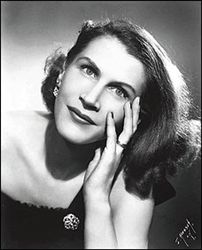

Jean Tennyson with Lanza, 1945

Between 1942 and 1946 Tennyson appeared regularly on the CBS radio program “Great Moments in Music,” which was sponsored by the Celanese Corporation of America, a company founded by her first husband, Camille Dreyfuss. It was in 1945 that Tennyson (on the recommendation of baritone Robert Weede) approved Lanza as a temporary replacement for tenor Jan Peerce on the CBS show, and in October and November of that year, respectively, the two singers performed the Act I duet from Verdi's Otello and an abridged version of the Act I duet from Puccini's Tosca. Both recordings have survived.